Everyday Hair Confidence
The mouse haircut: soft layers, a full fringe and less fuss
For Everyday Hair Confidence, we rate the mouse haircut’s gentle shape — but the fringe deserves a proper consultation before you commit.
By The Colour Edit Editorial Team
Published · 5 min read
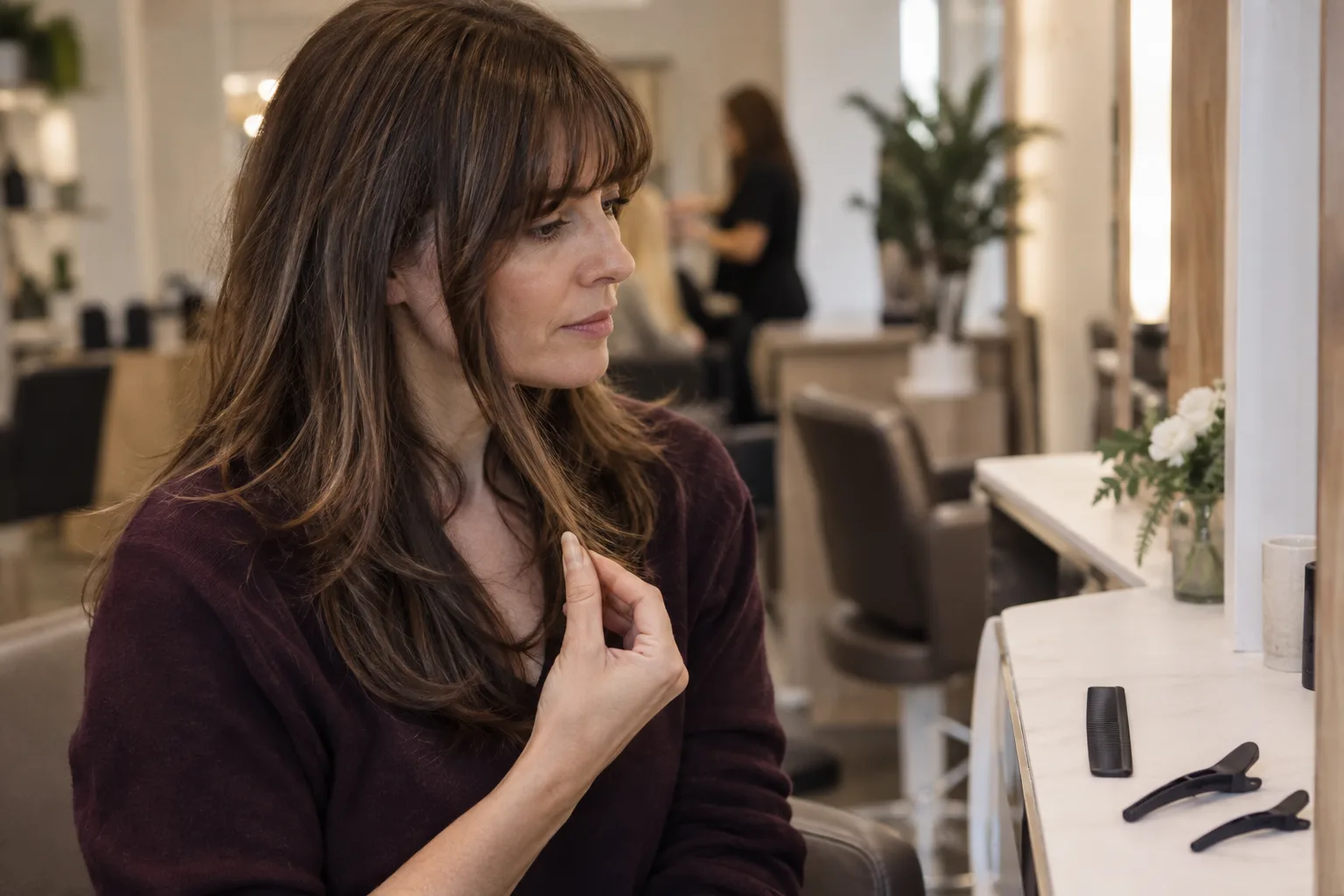
Quick answerThe mouse haircut combines mid-length or long hair, subtle layers and a full, soft-edged fringe with a 1970s feel. Ask your hairdresser to adapt the fringe to your natural texture and keep the layering restrained.
The mouse haircut offers a softer option for autumn 2026: a noticeable change around the face without sacrificing long lengths. Its defining feature is a full, relaxed fringe, backed by discreet layers rather than the pronounced steps of a shag. The appeal is in that balance — a distinct outline at the front, with plenty of familiar hair left behind it.
Our take for Everyday Hair Confidence is straightforward: this is worth considering if you like your current length but want a different frame for your face. The decision is less about adopting another animal-named trend and more about accepting the daily styling and trimming that a longer fringe can involve.
What happened
The mouse label brings together several established haircut details: mid-length to long hair, lightly shaped lengths and a fringe with a 1970s influence. Unlike a cut built around lots of short layers, most of the visual interest sits across the forehead and beside the cheekbones. That makes the front view particularly important during a consultation.
There is no single prescribed finish. The shape can be worn straight, with loose bends, with curls or with a round-brush blow-dry. A fringe worn forward gives a different result from one separated slightly through the middle. Those variations matter more than copying every detail of a reference photograph.
Take a description, not just a name
Ask for restrained layering, then show exactly where you want the fringe and face-framing sections to finish. Explain what you want to retain, too: the length needed for a ponytail, the weight through the ends or the ability to tuck the sides behind your ears. Those are useful cutting instructions; a trend name alone is not.
The distinction between a mouse cut and a much shaggier result is worth spelling out. If you want movement without lots of shorter pieces, say so before the scissors come out. Our guide to choosing an autumn haircut by its shape rather than its label applies the same principle to shorter lengths: agree on the details you will actually live with.
The background
A full fringe takes hair from the front section and brings it across the forehead. How substantial it looks depends partly on how much hair is included, not simply how bluntly the ends are cut. Ask your stylist to show you the proposed section before cutting, especially if you prefer to keep plenty of hair at the sides.
Natural growth direction also affects the finish. A strong parting or a cowlick at the front can encourage the fringe to separate or lift. That does not automatically rule it out, but it can change the styling involved. Arrive with your usual parting visible so your hairdresser can assess how the front naturally sits.
Keep texture in the conversation
On straight hair, small differences in fringe length can be easy to see. Waves may create an uneven-looking edge unless their movement is allowed for, while curls shorten as they dry. A curly version therefore needs its intended dry shape agreed in advance, rather than simply borrowing the length from a straight-haired reference.
Restrained layering is also worth discussing if you like a substantial-looking perimeter. Removing too much weight through the lengths can leave the ends looking less solid. Our styling ideas for fuller-looking shapes without a haircut offer an alternative if what you really want is a change in movement or volume, rather than a new fringe.
The name does not dictate the colour. Brunette, blonde, copper and grey hair can all carry this shape; mousy colouring is not an entry requirement. If you already have highlights around your face, however, cutting a fringe changes where those lighter strands finish and how they sit together. Discuss the cut before agreeing any fresh colour placement.
What people are saying
Our view is that the most useful feature is the contrast between a defined front and relatively uncomplicated lengths. We rate that for anyone who wants a recognisable change without taking their whole haircut shorter. We would not describe it as automatically low-maintenance: the fringe can need attention even when the rest of the hair is ready to leave alone.
There is also a practical difference between liking a fringe in a photograph and liking it near your eyes throughout the day. A long edge may look appealing when freshly styled but become irritating as it grows. Ask for a comfortable resting length, and discuss how often you would realistically return for a tidy-up.
The questions worth asking in the chair
A useful consultation covers three things: how the fringe will dry naturally, what it takes to restyle it and how it will look as it grows. Ask your stylist to demonstrate the finish with tools you already own. Our guide to what to ask for when choosing a fringe over 50 is another starting point for that conversation, with texture and upkeep taking priority over age rules.
For colour maintenance, a fringe is a styling choice, not a substitute for root coverage. Wearing it forward can obscure some of the front hairline, but separation and movement may reveal it again. The top parting can remain visible too. Decide which areas bother you in your normal hairstyle before adding another colouring step.
If you use a temporary root concealer, keep it to its intended application areas and follow the directions. Never mist a root spray towards the face or eyes, and do not use hair concealer on eyebrows. A long fringe is not a reason to bring these products closer to the eyes; style it first, then assess any suitable areas elsewhere.
What happens next
Before booking, gather two or three reference pictures with textures close to your own. Include a view of the lengths as well as the fringe: a front-facing portrait cannot show how heavily the back has been layered. Note what you like in each picture so the appointment does not become a guessing exercise.
A manageable routine at home
For a straighter finish, gently dampen the fringe and brush it from side to side while drying on a suitable heat setting, keeping the dryer moving. Finish in the direction you want it to sit. With curls, preserve the curl pattern rather than repeatedly brushing it straight, and ask for a demonstration of suitable drying and shaping techniques.
You need not buy a whole new styling kit. Choose an attachment for the finish you want, rather than the haircut’s name; our guide to which multi-styler attachments you actually need explains their different jobs. Before leaving the salon, also ask about fringe-trim availability and cost. That small appointment may become the most regular part of maintaining the shape.
Why this matters
For UK readers balancing salon costs with everyday styling time, the useful question is what this haircut changes in your routine. Ask for the price of fringe maintenance, a realistic home-styling demonstration and advice on any existing face-framing colour before booking. There is no need to add a colour appointment simply to match the name. If you are keeping your greys, our colour and styling ideas for long grey hair offer another way to think about the finished look.
Common questions
- What is a mouse haircut?
- A mouse haircut combines mid-length or long hair with subtle layers and a full, relaxed fringe inspired by 1970s shapes. Most of its definition sits around the face rather than in heavily layered lengths.
- What should I ask for to get a mouse haircut?
- Ask for restrained layers and a full, soft-edged fringe adapted to your texture. Bring reference pictures and agree on fringe length, face-framing pieces and how much length you want to retain.
- Does the mouse haircut work on curly hair?
- Yes, the shape can be adapted for curls. Agree on the fringe’s intended dry length with your hairdresser, because curls shorten as they dry, and discuss styling that preserves their natural pattern.
- Is a mouse haircut low-maintenance?
- Not necessarily: the lengths may be straightforward, but the fringe can need restyling and regular trims. Your natural growth direction, preferred finish and tolerance for hair near your eyes all affect the upkeep.
- Do I need mousy blonde hair for a mouse haircut?
- No, the name describes the haircut rather than a required shade. It can be worn with brunette, blonde, copper or grey hair without changing your colour.
- Will a full fringe hide grey roots?
- A full fringe may obscure part of the front hairline, but it does not colour grey roots. Movement can reveal the hairline again, and roots along the top parting may remain visible.
- How do I style a mouse haircut fringe?
- For a straighter finish, dampen the fringe and brush it gently from side to side while drying, then guide it into place. For curls, preserve the curl pattern and ask your hairdresser to demonstrate a suitable routine.
Sources
This article was written by The Colour Edit using the sources listed above.