Everyday Hair Confidence
Nicole Kidman's maxi fringe: what to ask your hairdresser
The appeal of Nicole Kidman's long fringe is its adaptable shape — but the right cut starts with your hair's natural movement.

By Priya Nair, Salon & Beauty Writer
Published · 5 min read
Quick answerA maxi fringe is a long fringe with a shorter centre and longer sides that blend towards the cheekbones. Nicole Kidman's version combines gentle texture with movement, making it a useful reference for changing the front of your haircut without shortening the rest.
Nicole Kidman's latest long fringe offers a useful salon reference for anyone who wants a different shape around the face without sacrificing the rest of their length. At a Paris Fashion Week spring/summer 2027 show on 5 October 2026, she wore it gently textured, with a shorter centre and longer sides reaching towards the cheekbones.
Our take: the interesting part of this maxi fringe is not its name, but the transition between the middle and the edges. That shape gives a hairdresser something specific to work with. For everyday wear, the questions are practical: where will it sit when dry, how much styling will it need, and what happens when you change your parting?
What happened
Hairstylist John Nollet created Kidman's look. Rather than a straight, uniform line across the forehead, the fringe had graduated lengths that connected it to the hair around her face. The finish was deliberately natural-looking, with texture rather than a rigid, perfectly smooth surface.
Kidman has also worn her longer fringe divided through the centre in a curtain shape and styled with more blow-dried fullness. Those variations show why the reference is useful: a long fringe need not always be arranged in exactly the same way. Its flexibility still depends on the cut and how readily the hair changes direction.
The maxi label is best treated as shorthand, not a technical instruction. It tells your hairdresser that you are interested in length, but not how wide the fringe should be, where its shortest point belongs or how much hair should be brought forward. Those decisions have more bearing on the result than the trend name.
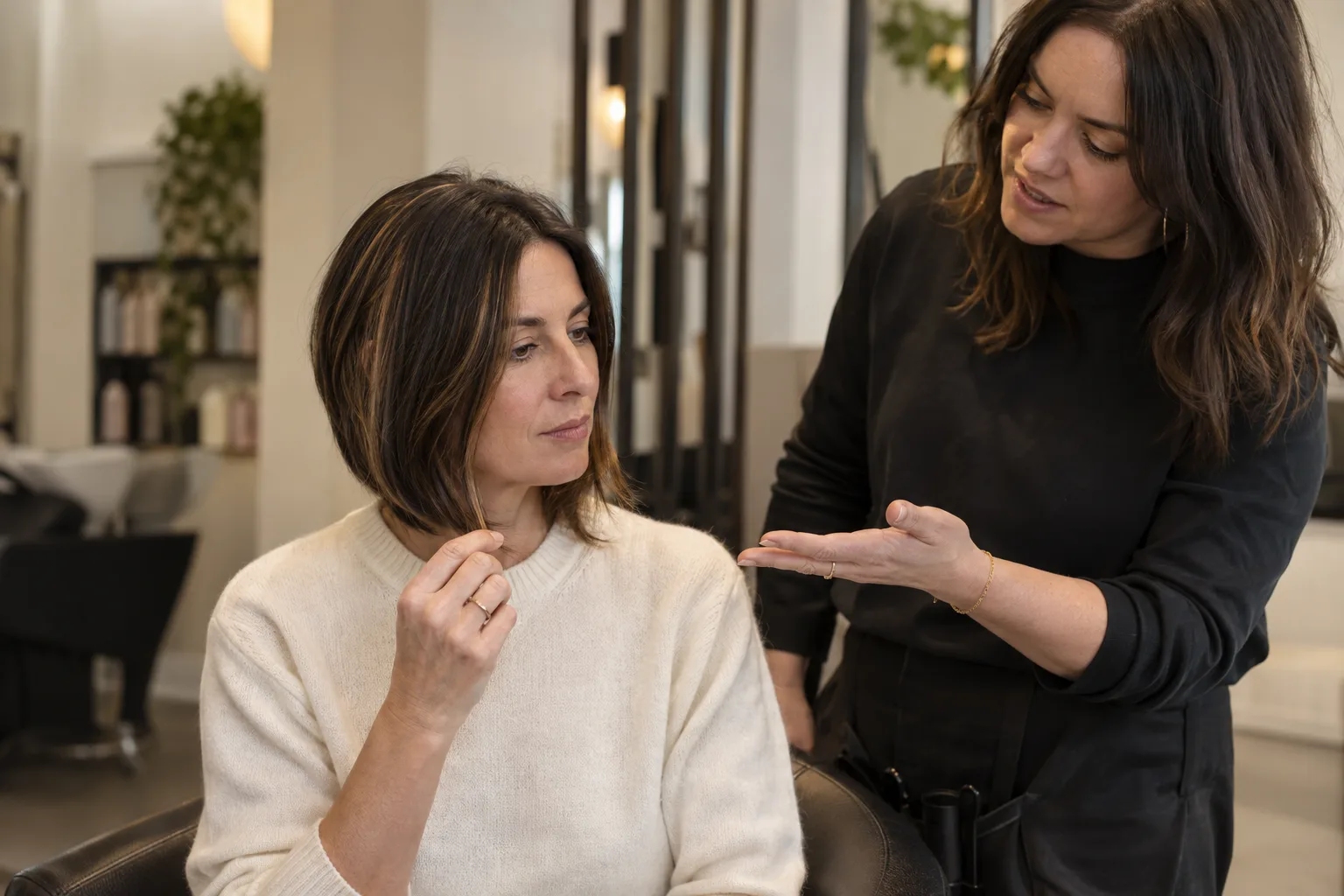
Take a photograph, then identify the detail you like. Is it the cheekbone-length edge, the gaps between sections or the way the fringe joins the sides? Our guide to choosing a bob by its shape rather than its label follows the same principle: describe the haircut, not just the headline.
The background
Your natural texture sets the starting point
A fringe occupies a small area, but it makes the hair's natural direction very noticeable. A strong front cowlick can encourage a split or lift one section. Ask your hairdresser to look at the front while it is dry and sitting normally before deciding where to section and cut it.
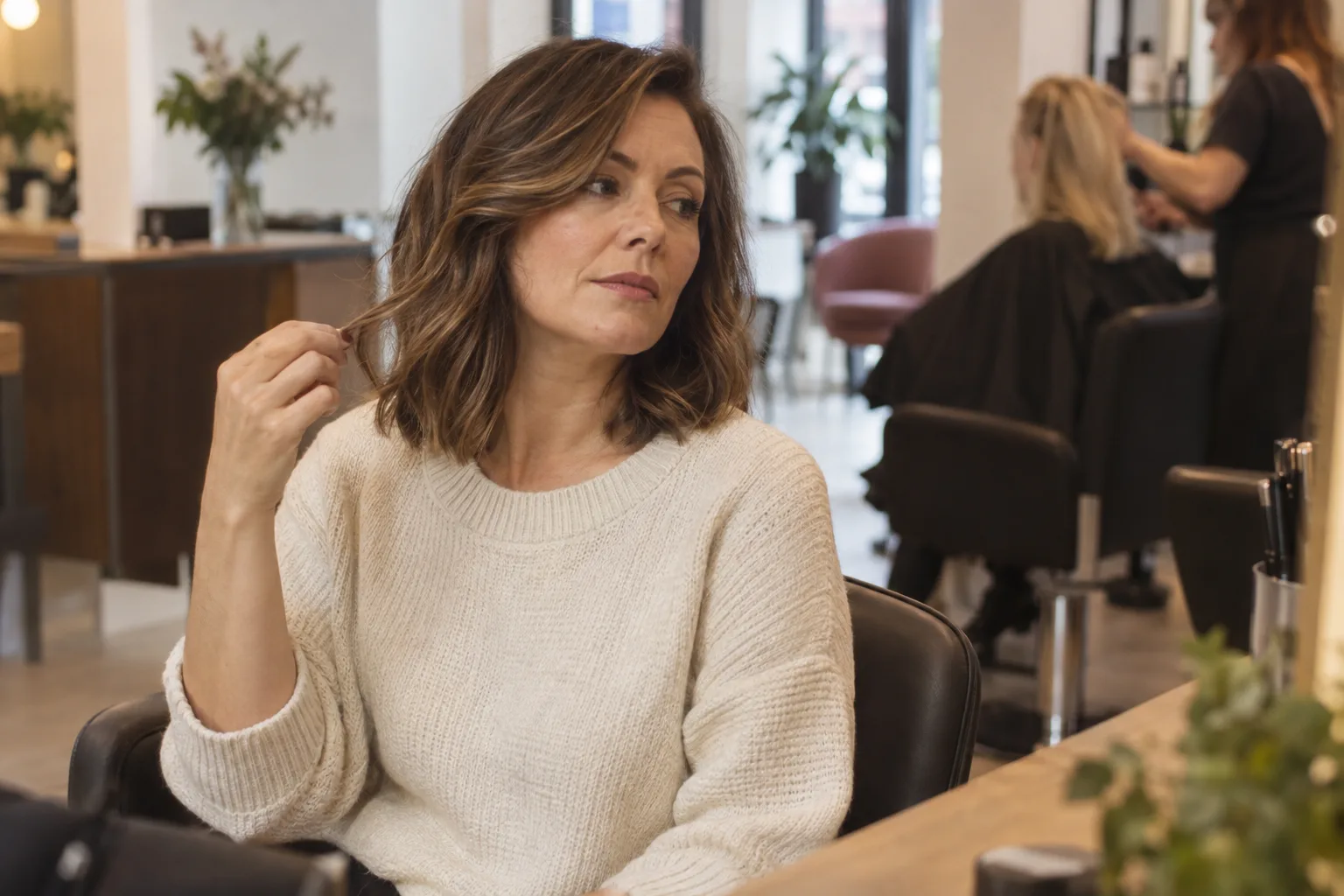
Waves and curls need their own length calculation. Hair can sit shorter as it dries and its natural pattern returns, so a wet reference point alone is not enough. Explain how often you wear your own texture; a fringe designed around daily straightening may look quite different on an air-dried morning.
The amount of hair included matters, too. Bringing more hair forward creates a more substantial fringe but takes that hair away from the sides. A lighter section leaves more separation. Neither is automatically better: the choice should account for the outline of your existing cut and the finish you actually want.
Colour changes the visual effect
A new fringe rearranges where colour sits around the face. Hair previously swept back may now fall across the forehead, while an old face-framing highlight may land in a different place after cutting. If you are booking both services, tell your colourist about the proposed fringe before they plan the placement.
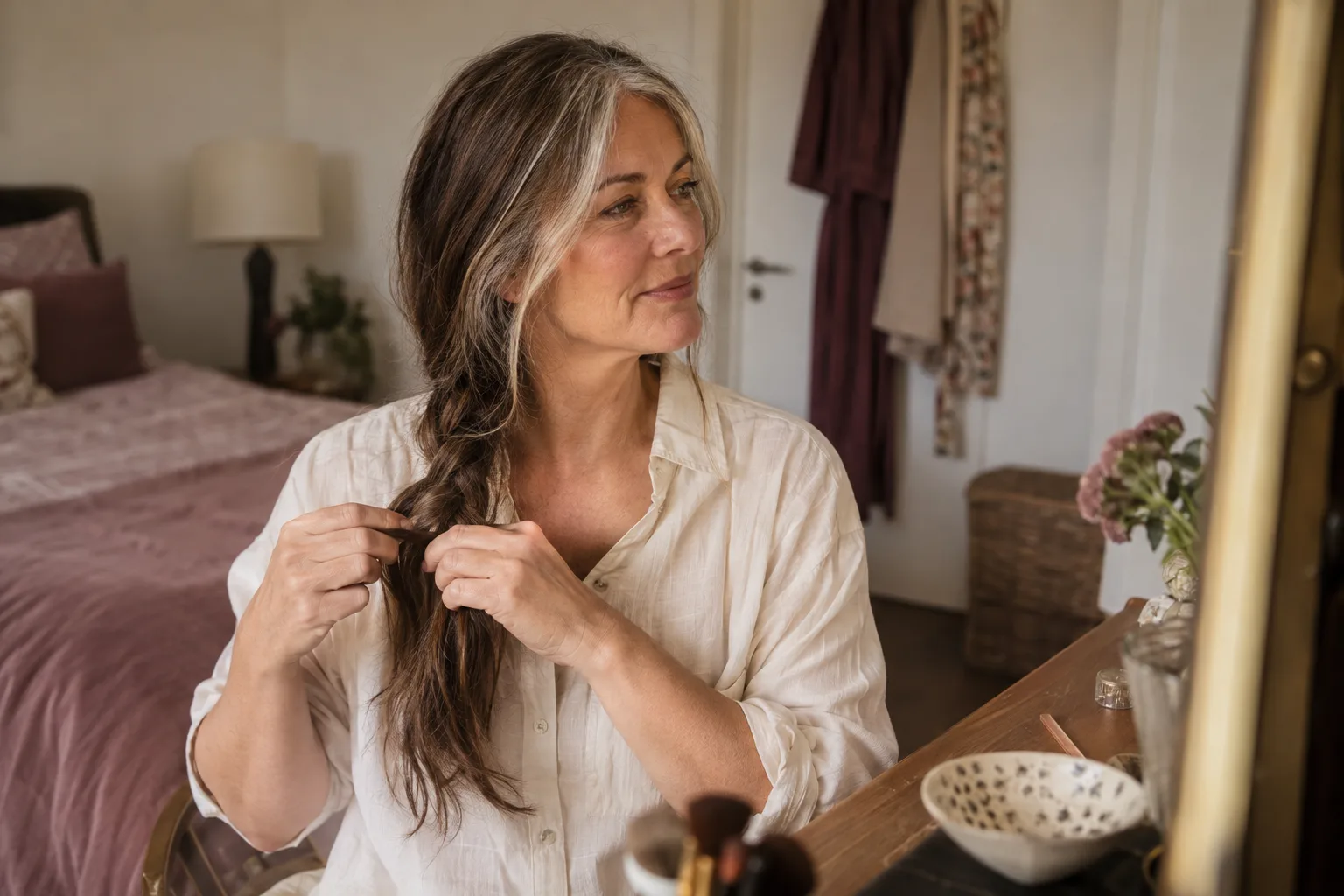
Grey roots deserve a separate conversation. Wearing hair forward may obscure some of the front hairline, but a split through the centre can expose a different strip of roots. A fringe is a styling choice, not reliable colour coverage; check it in the positions you expect to wear rather than judging only the freshly finished salon version.
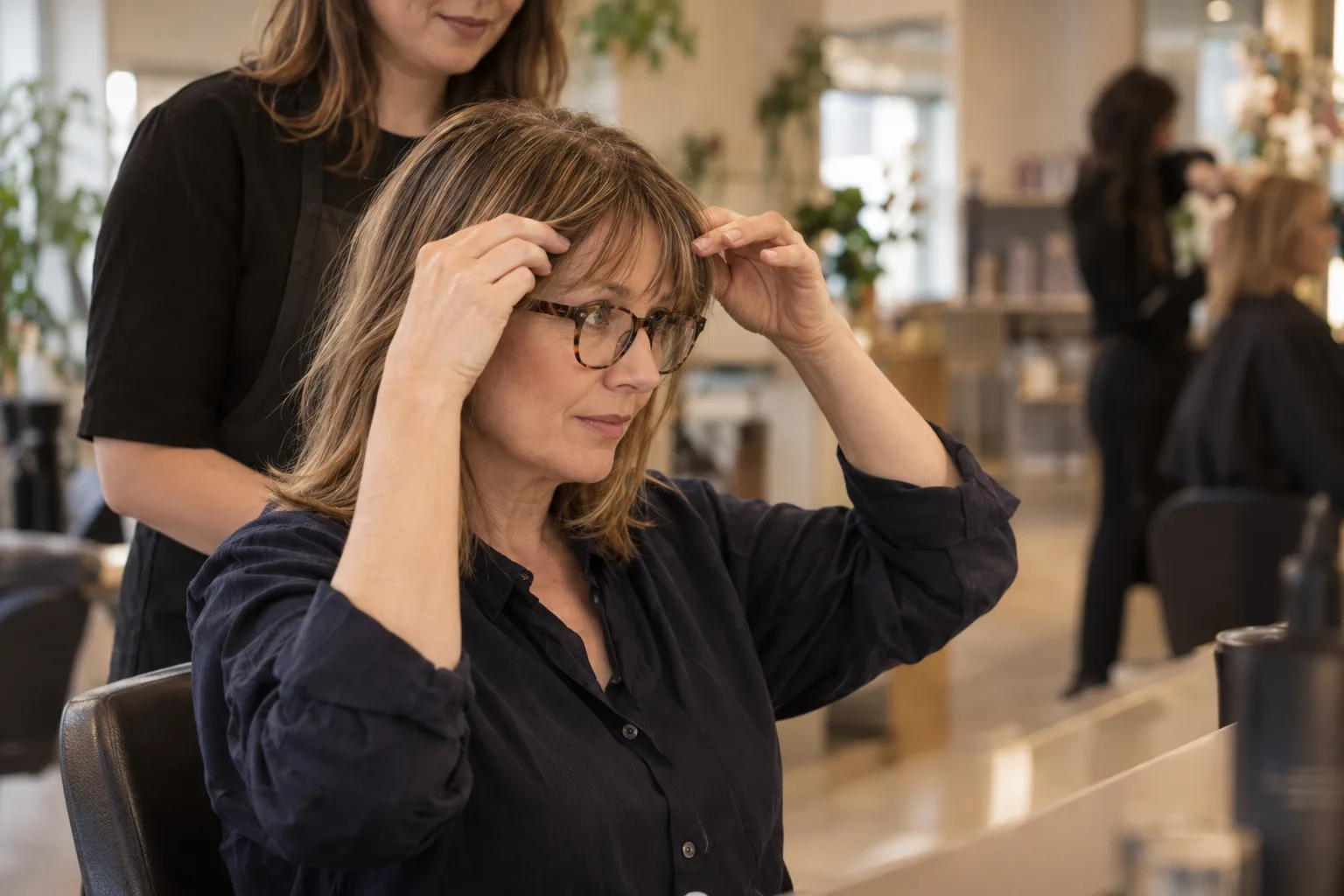
Glasses are another useful fitting tool. Bring your everyday pair to the appointment so your hairdresser can check where the fringe meets the frame. A length that looks right with glasses off may catch on them or be pushed upwards once they are back on.
What people are saying
In an interview with Elle UK, Nollet described a process involving a brush blow-dry, straighteners to flatten the hair, then added movement and texture from products worked through with his hands. He also identified layers as the basis of the style and a way of creating volume.
That is an important distinction: a natural-looking finish is not necessarily an unstyled one. The useful lesson is to ask what each step is doing, rather than assuming every tool is essential for everyone. Your own texture may need smoothing, encouragement to bend or simply help settling in the right direction.
We rate this reference for its focus on shape rather than an age-based promise. A fringe can change the balance of a haircut and draw attention towards the face; it does not need to be sold as a way to look younger. The better test is whether you like its outline and can live with its upkeep.
Nor would we prescribe the same fringe for every hair type. Someone happy to blow-dry the front each morning has a different brief from someone who wants to wash and leave it. Be candid about that distinction during the consultation. It helps the hairdresser adapt the idea instead of reproducing a finish that only works with a routine you dislike.
For the rest of the haircut, bring a second reference if necessary. Our look at two brunette wave shapes to discuss at the salon is useful for separating the movement you want through the lengths from the details you want around the face.
What happens next
Make the appointment a fitting, not a copy
Ask your hairdresser to show where the shortest section would finish before cutting. Then discuss the width, the connection to the side layers and how much of the fringe you hope to tuck or pin back. Longer edges may move aside easily while the shorter centre still needs a clip.
Ask about fringe-trim arrangements before leaving. There is no single maintenance interval that suits everyone: the trigger is when the length stops sitting comfortably or obstructs your view. Knowing how your salon handles small adjustments makes the commitment clearer than a vague promise of easy upkeep.
Practise the finish while you are there
For a smooth version, ask for a demonstration of directing the roots while the fringe is damp, then shaping the ends. Use heat protection according to its instructions and avoid resting hot tools on one spot. Straighteners should only be used on dry hair unless the appliance is specifically designed otherwise.
Start with a small amount of styling product and add more only if needed. Too much can clump the sections or make them sit heavily against the forehead. Before buying anything, establish whether your fringe needs hold, smoothing or texture; those are different jobs, not reasons to pile on three products.
Finally, try tying your hair back before you leave. The side pieces can look different without loose lengths behind them. Our guide to a softer high ponytail offers another reference for balancing a pulled-back style with the hair around your face.
Related: Long grey hair: the colour and styling ideas we rate for 2026
Why this matters
For UK readers planning their next salon visit, the useful investment is a precise consultation, not a request for a celebrity copy. Take your glasses, explain your morning routine and tell your colourist if the new fringe will change where you part your hair. Ask for the price of future fringe trims, too, so the upkeep is clear. As with choosing the right bob shape, a few practical decisions can make the difference between liking the salon finish and enjoying the cut at home.
Common questions
- What is a maxi fringe?
- A maxi fringe is a long fringe; Kidman's version has a shorter centre and longer sides towards the cheekbones. The name is shorthand rather than a precise cutting instruction, so discuss its width, length and shape with your hairdresser.
- What should I ask for to get Nicole Kidman's fringe?
- Ask for a consultation about a long, gently textured fringe with a shorter centre and sides that connect to your face-framing layers. Bring a photograph and explain which details you like rather than relying on the name alone.
- Can I have a maxi fringe with wavy or curly hair?
- Yes, but the length needs to account for how your waves or curls sit when dry. Tell your hairdresser whether you usually wear your natural texture or straighten it, because that changes the cutting and styling brief.
- Will a fringe hide grey roots?
- A fringe may obscure part of the front hairline, but it is not reliable grey coverage. Splitting or sweeping it aside can expose different roots, so check the cut in the positions you plan to wear.
- How do you style a long fringe?
- For a smooth finish, direct the roots while damp, then shape the ends as you dry. Ask your hairdresser to demonstrate a technique suited to your texture, use heat protection as instructed and apply styling products sparingly.
- Can I wear a maxi fringe with glasses?
- Yes, but its length should be checked with your glasses on. Bring your everyday pair to the appointment so your hairdresser can see whether the fringe catches on the frame or gets pushed upwards.
- Can you pin back a maxi fringe?
- Longer sections may pin back, but the shorter centre can need a separate clip. Tell your hairdresser before cutting if wearing it off your face is important, and test the options at the appointment.
- How often does a long fringe need trimming?
- There is no single interval for everyone. Arrange a trim when the fringe stops sitting comfortably or starts obstructing your view, and ask your salon about adjustment appointments and prices before committing to the cut.
About the writer
Priya NairSalon & Beauty Writer · Birmingham
Priya brings salon know-how and clever beauty hacks.
More from PriyaSources
This article is original reporting by The Colour Edit based on the sources above. Last reviewed 9 October 2026. Product mentions are editorial unless clearly marked as sponsored.