Beauty Hacks
Hairstyles for fine hair: fuller shapes without a haircut
A fuller-looking finish starts with shape, not necessarily scissors. Here’s how to choose the right styling trick for your roots, lengths and ends.
By The Colour Edit Editorial Team
Published · 5 min read
Quick answerHairstyles for fine hair can look fuller with lifted roots, loose waves, curved-under ends or a softly shaped updo. Start by changing your parting; subtle highlights and lowlights can add visual depth, but colour does not create volume.
Fine hair can look fuller without a shorter cut: the useful changes are often in the way roots sit, lengths bend and ends come together. A lifted blow-dry, a looser updo or a different parting each tackles a different part of that picture. None needs to be treated as a total hair reinvention.
Our Beauty Hacks take is to choose the effect before choosing the technique. Want height at the crown? Work at the roots. Want more presence around your shoulders? Add movement through the lengths. Colour can contribute depth, but it belongs in a separate conversation from styling. That distinction helps avoid buying a cupboard of products for a job that needs a brush and a little direction.
What happened
The practical appeal of fuller-looking styling is that it offers alternatives to changing your haircut. Several familiar techniques work by altering the outline of the hair, rather than its length: rolling the ends inwards, opening up a wave pattern or arranging an updo into a broader shape.
We rate starting with the area that bothers you most when you look in the mirror. Hair that sits flat on top needs a different approach from lengths that fall into narrow sections. Trying to create maximum volume everywhere can leave a style less balanced, particularly on shorter cuts.
Start with the outline
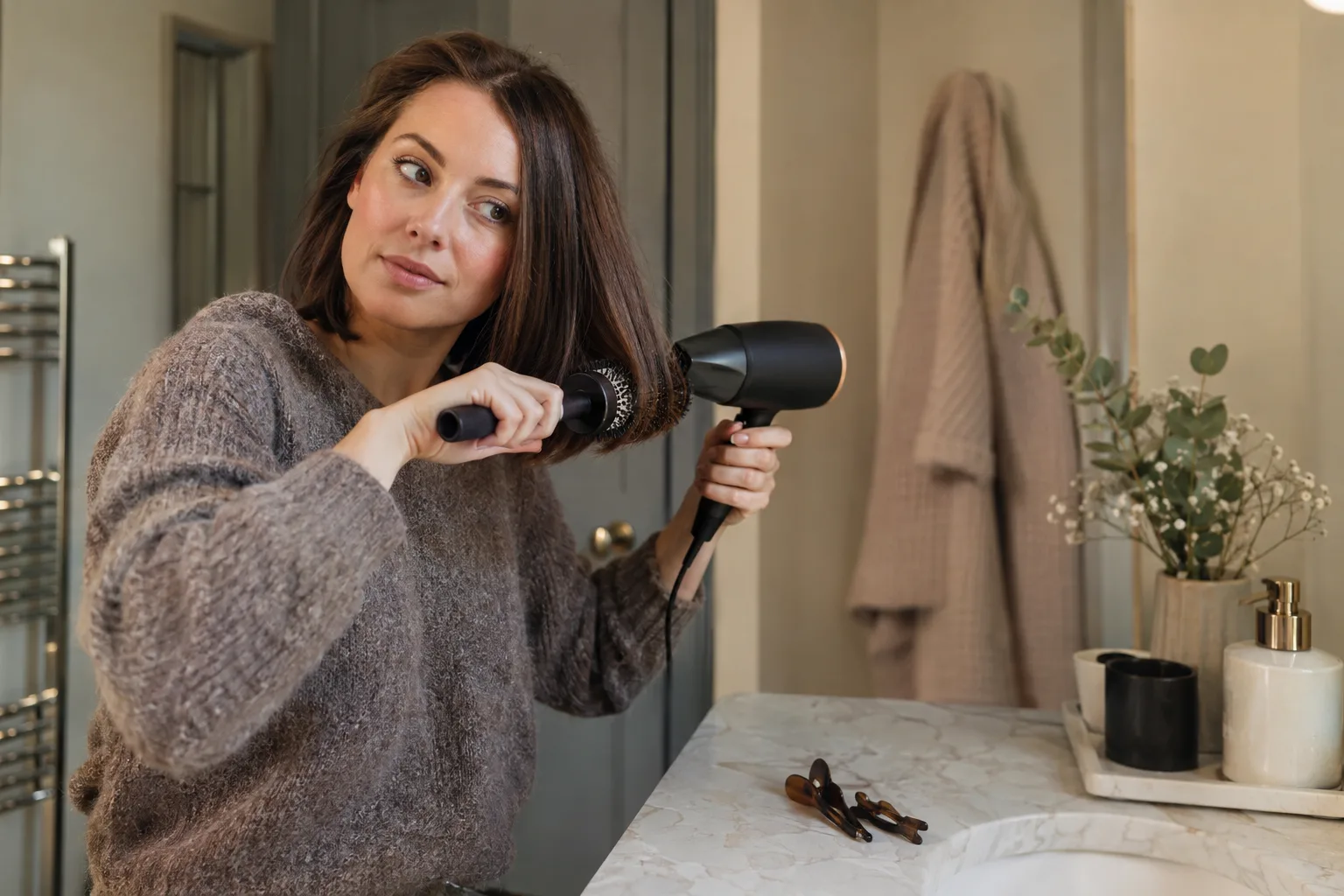
For ends that look a little insubstantial, try a gentle inward curve with a round brush. Work in manageable sections and guide the last few centimetres underneath, rather than flipping them out. The aim is a connected edge, not a tight ringlet. Let each section cool before disturbing it so the curve has time to settle.
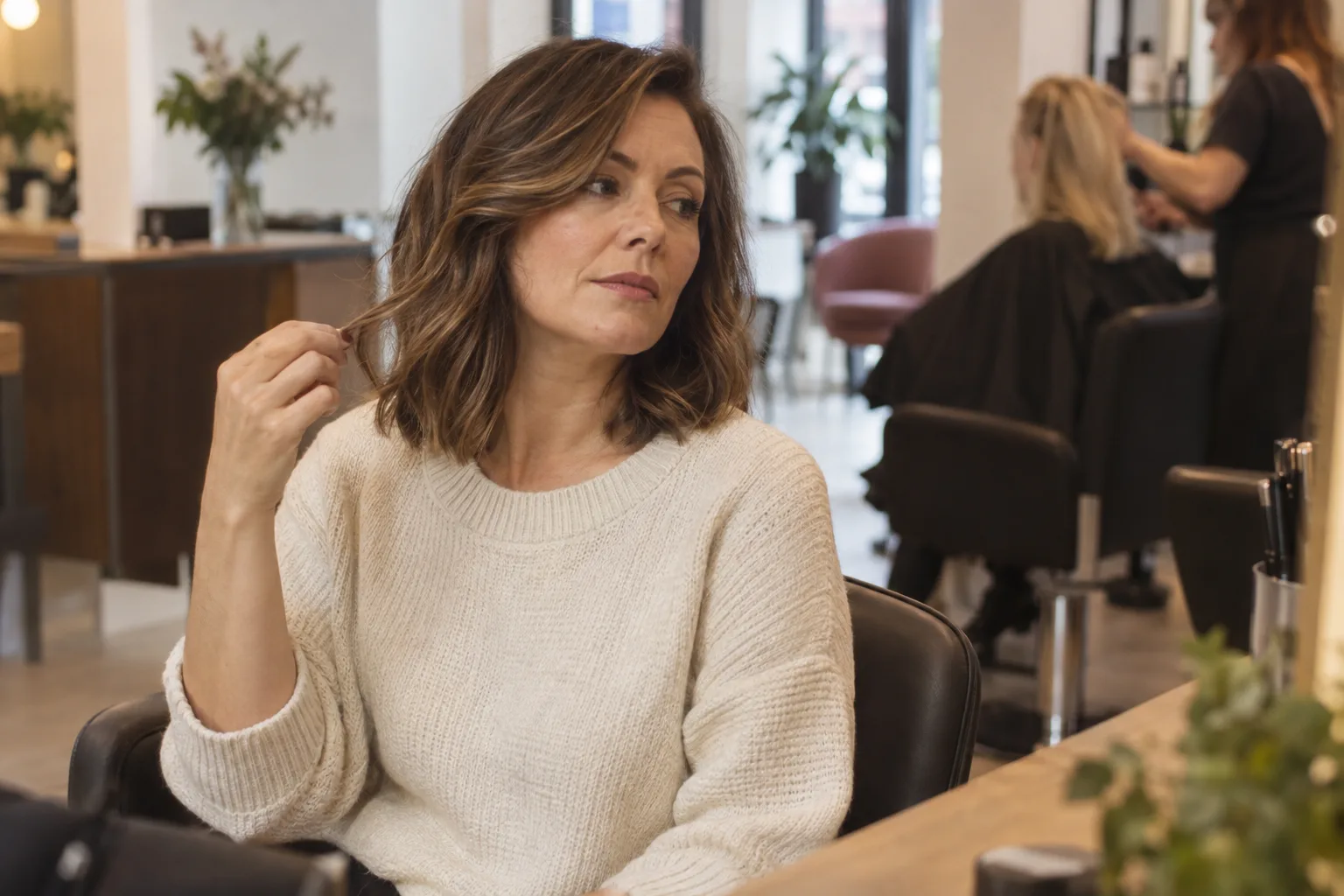
For more width through the middle, use relaxed waves. With a wand or straightener, work on dry hair and follow the tool’s instructions, using suitable heat protection. Allow the bends to cool, then separate them gently with your fingers. Breaking up the sections gives a softer outline than leaving every curl in a neat ribbon.
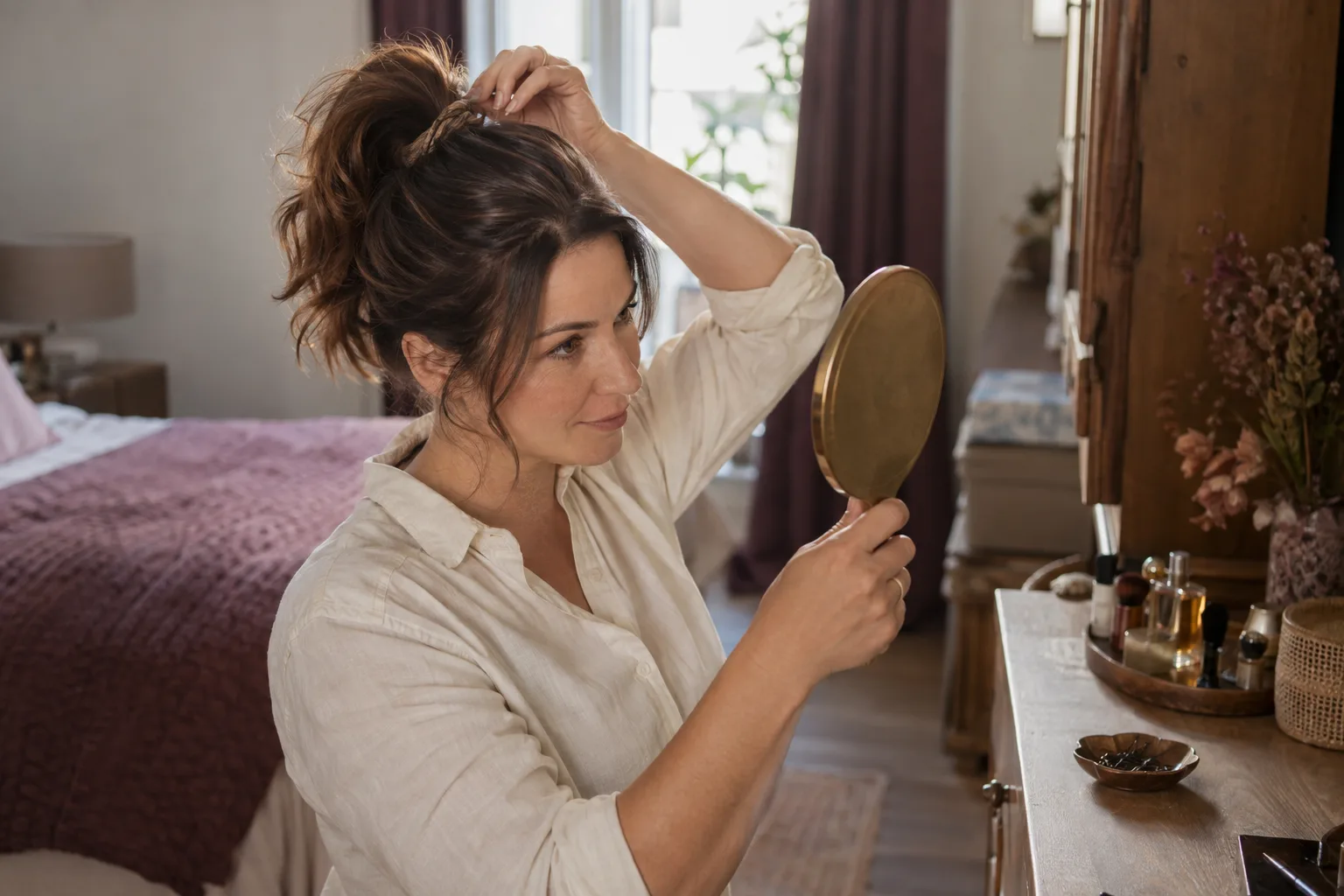
A low twist offers another route: fold the lengths into a broad shape and secure them with pins rather than winding everything into the smallest possible knot. Check the side view as well as the back. A little projection can matter more than the size of the bun itself.
The underlying principle is proportion. Our guide to choosing a bob haircut by its shape takes the same practical approach: look at where the outline sits, rather than relying on a style’s name to tell you how it will work.
The background
Fine describes the diameter of individual strands; it does not, by itself, tell you how much hair someone has. It also does not prescribe one ideal hairstyle. Natural texture, length, layering and the direction the roots grow all affect how a finished look sits.
Give roots a different direction
Moving a familiar parting can create lift because you are directing sections away from their usual position. Start with a modest shift rather than a dramatic sweep. If one side looks lifted but the other feels too exposed, bring the line slightly closer to the centre until the balance feels right.
For a blow-dry, apply a small amount of lightweight mousse as directed, then lift sections at the roots with a round brush. Keep the dryer moving and avoid pressing its nozzle against the hair. You are creating space between the roots and the head, rather than repeatedly smoothing everything downwards.
Product placement matters here. A rich finishing cream that makes ends feel polished may be too weighty at the crown. Begin sparingly and add only where needed; using more product is not a reliable route to more height. Equally, a texture spray adds grip and separation, not the curved shape supplied by a brush or tong.
Colour creates depth, not lift
Highlights and lowlights introduce lighter and darker areas that can make movement easier to see. The result depends on placement and contrast, not simply on becoming blonder. Ask a colourist how they would work with your existing shade and everyday parting before deciding on a technique.
Grey hair can also have natural tonal variation, so adding colour is not a prerequisite for dimension. Our colour and styling ideas for long grey hair explore ways to work with that variation. There is no need to conceal silver strands simply to pursue a fuller-looking shape.
What people are saying
Our view is that useful volume advice should name the result it promises. Height, width, texture and colour depth are not interchangeable. A tousled finish can look expansive without much root lift; a smooth blow-dry can have height while remaining sleek. Neither is the wrong version of fuller hair.
We would also separate polish from tightness. An updo does not need to be pulled flat against the head to look deliberate. Smooth the surface lightly, then preserve a little room within the twist or roll. Our guide to a softer high ponytail is another useful reference for balancing control with shape.
Keep the finishing products in their lane
Pomade can tidy flyaways, but generous application can make strands group together and look flatter. Rub a very small amount between your fingertips and target the areas that need control. For an airy finish, leave the body of the hairstyle alone rather than coating every section.
Root concealer has a different purpose again. A temporary powder or spray can disguise grey roots; a product specifically intended for cosmetic parting coverage can soften visible colour contrast there. Neither physically lifts the roots. Use only on the areas permitted by the label, keep away from the eyes and follow the removal instructions.
For that reason, our first move would be styling, with concealment an optional final detail. Establish the parting and shape before applying temporary colour, so you can see exactly where it is needed. Moving the hair around afterwards can uncover untreated areas or disturb the finish.
What happens next
Try one change on your next wash day rather than layering every technique together. Keep your usual products and alter the parting, or keep the parting and practise turning the ends under. Changing one variable makes it easier to judge what genuinely helps and what takes more effort than it is worth.
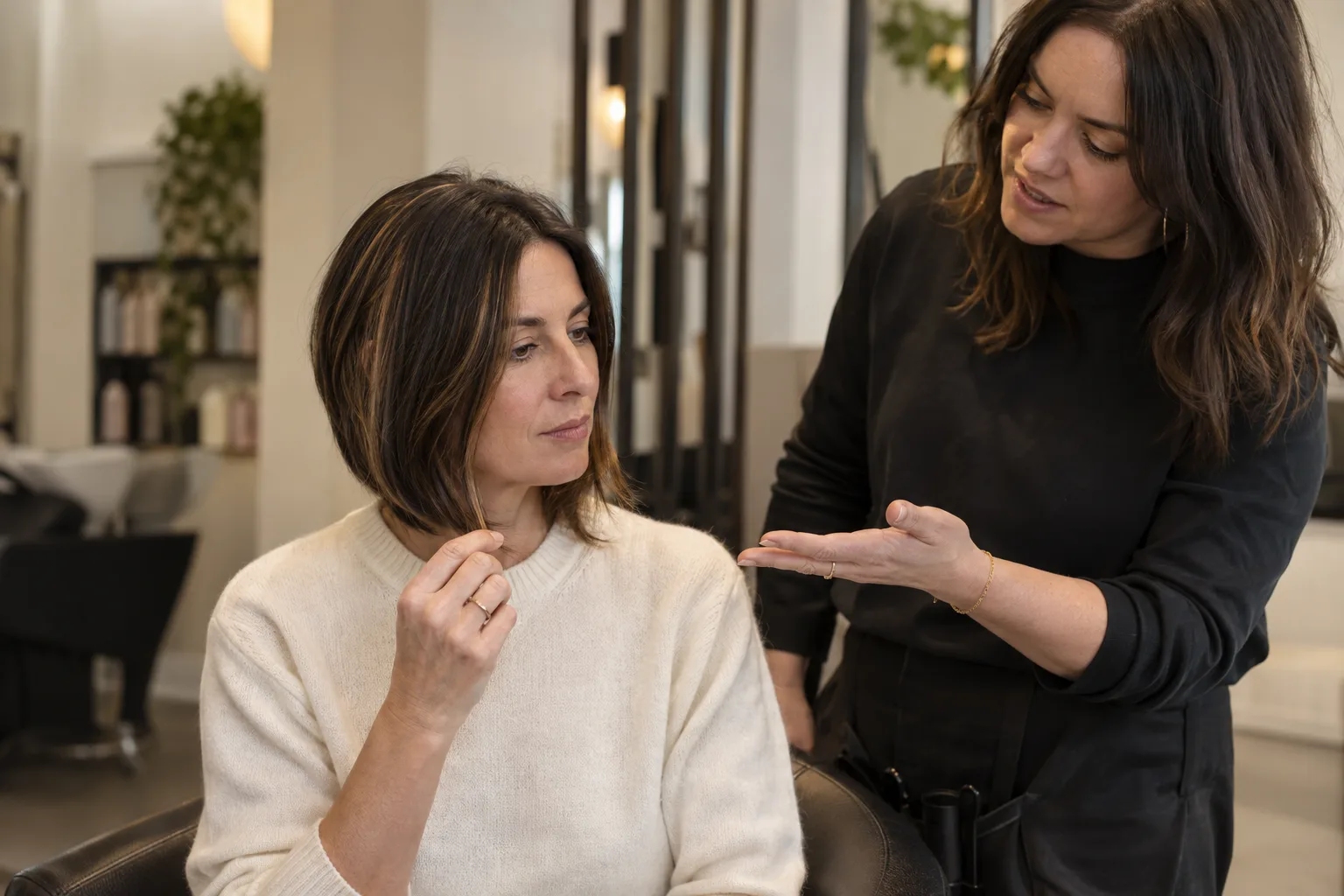
If you are booking a salon appointment, take a reference picture and explain which feature you like: the lifted crown, the rounded ends or the width around the face. Ask the stylist to demonstrate the relevant section on your own hair, including brush position and product quantity, so the advice translates beyond the salon chair.
For colour, discuss maintenance alongside placement. Ask how any new highlights or lowlights will sit with your roots as they become visible, and whether a subtler contrast would suit your appointment schedule. The most useful fuller-looking finish is one you can comfortably recreate, not one that requires a new colour service whenever the styling falls flat.
Why this matters
For UK readers weighing up another salon booking or another styling purchase, separating shape from colour makes the decision clearer. Try a reversible adjustment first, then spend on the technique you actually want help with. If dimension is the goal, our guide to brunette waves and salon reference looks offers a useful starting point for that conversation. Ask your stylist what you can reproduce at home, and your colourist what upkeep the proposed placement needs.
Common questions
- What hairstyles make fine hair look fuller?
- Lifted blow-dries, relaxed waves, curved-under ends and softly shaped updos can make fine hair look fuller. Choose according to where you want the effect: height at the roots, width through the lengths or a more substantial-looking edge.
- Does changing your parting add volume?
- Changing your parting can create temporary lift by directing hair away from its usual position. Start with a small shift and adjust until both sides feel balanced.
- How do you make fine hair ends look thicker?
- Turning the ends gently under can create a more substantial-looking edge. Use a round brush in manageable sections and let the curve cool before disturbing it.
- Are highlights good for making hair look fuller?
- Highlights and lowlights can add visual depth, but they do not create physical volume. Ask a colourist about placement that works with your existing shade, usual parting and maintenance schedule.
- How do you put fine hair up without making it look flat?
- Try folding the lengths into a broad twist instead of a tightly wound knot. Secure with pins, smooth the surface lightly and check the shape from the side as well as the back.
- Does root powder give hair more volume?
- Root concealer powder changes colour contrast rather than physically lifting hair. Style first, then apply only where needed and where the product label permits.
- What should I ask my hairdresser for if I want more volume?
- Identify where you want height or width, then ask your hairdresser to demonstrate the styling technique on your hair. A reference picture helps explain the shape; a product quantity and brush demonstration help you recreate it.
Sources
This article was written by The Colour Edit using the sources listed above.