Salon Secrets
Fringes for women over 50: what to ask for at the salon
Our Salon Secrets guide to fringe shape, styling commitments and the consultation details that matter more than an age label.
By The Colour Edit Editorial Team
Published · 6 min read
Quick answerThe best fringes for women over 50 suit the hair’s natural movement, the desired shape and the daily styling routine. Soft curtains, side-swept lengths and wispy fringes offer different levels of forehead coverage; age alone does not determine the right cut.
A fringe offers a focused change for an autumn haircut: a different outline around the face, without taking the rest of the hair shorter. For women over 50, the useful choice is not between looking younger and looking older. It is between shapes that work with their hair and shapes that demand more styling than they want to do.
Our pick for a flexible starting point is a longer fringe with edges that connect to the surrounding cut. That is an editorial preference, not a rule: a shorter, more defined fringe can be just as successful when its daily upkeep is part of the decision.
What happened
The fringe conversation brings together several quite different cuts under one age-based heading. Separating them by how they sit, rather than by a celebrity nickname, makes the salon brief much clearer. These are the distinctions worth knowing before choosing a reference photograph.
Choose the outline first
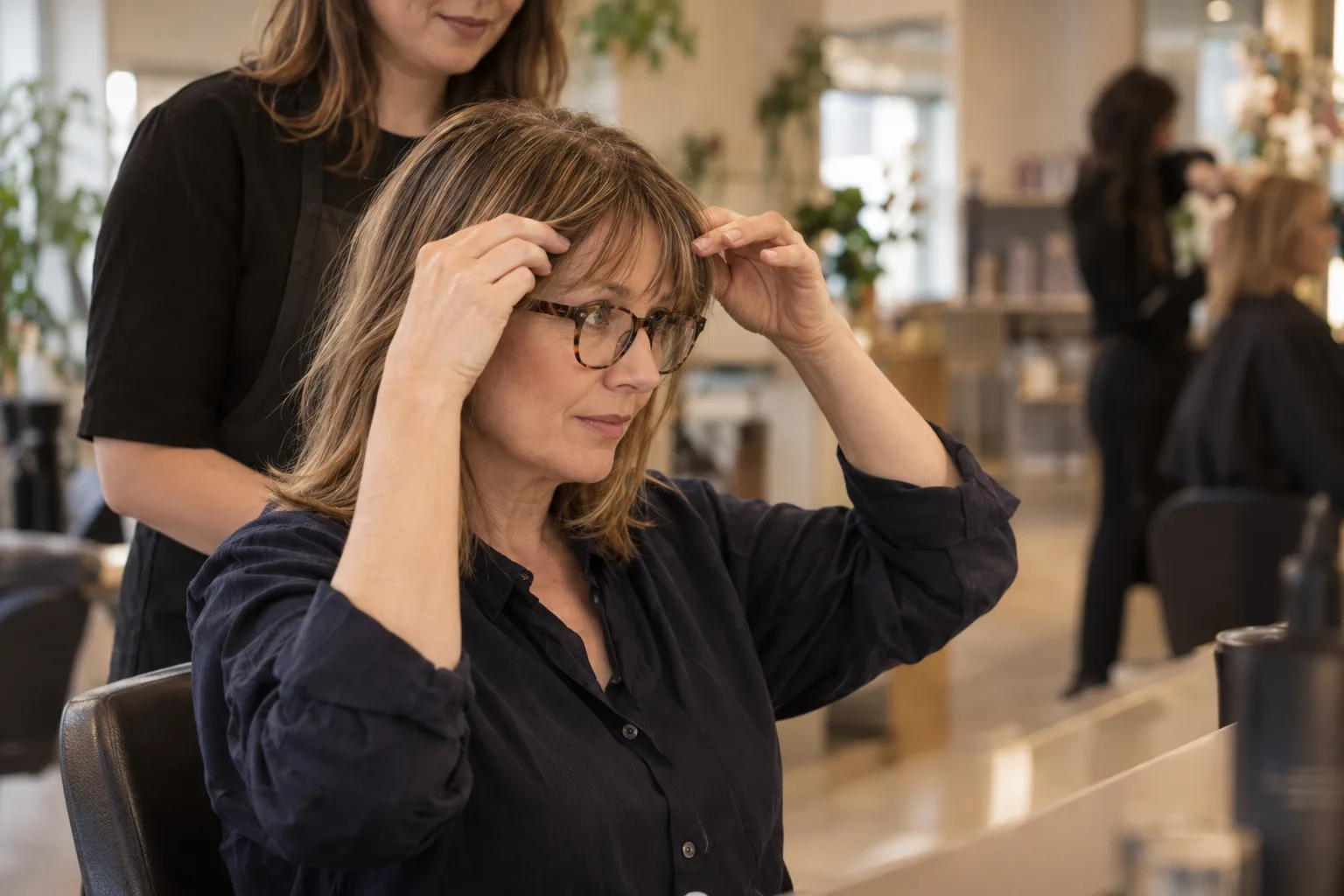
Soft curtains divide around a central opening, with the sides framing the face. The opening makes the parting an important part of the design. Shorter versions give a more definite fringe shape; longer pieces can blend into the front layers rather than sitting apart from them.
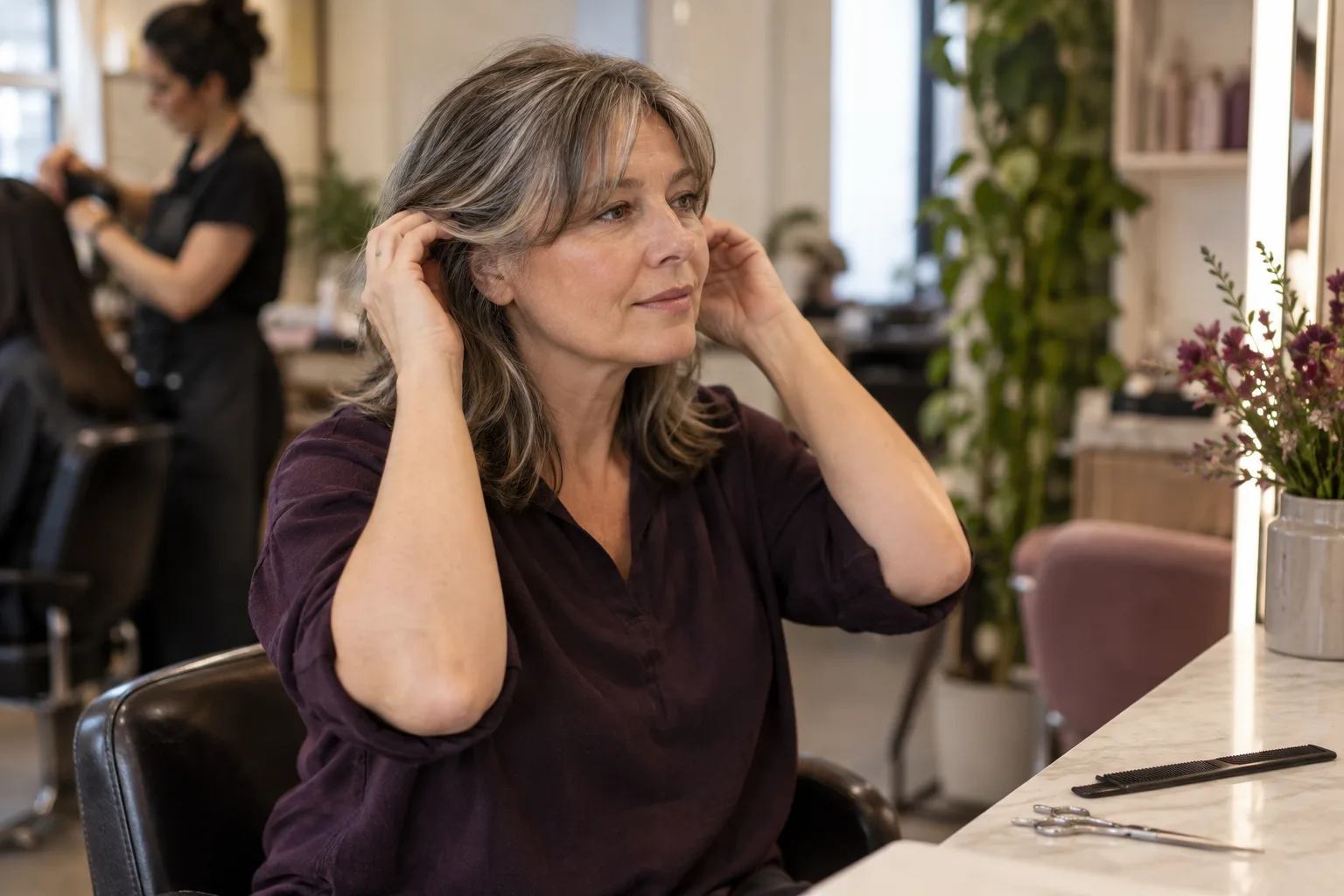
A full, wispy fringe covers more of the forehead but has a less solid edge than a blunt cut. Full describes its spread across the front; wispy describes the separation within it. Ask to see the intended width, because a broad fringe and a narrow one create different outlines.
A side-swept fringe travels diagonally from a parting. It is also a useful way to arrange an existing fringe as it gets longer. Its success depends on having enough length to sweep across rather than springing back into the middle.
An above-brow fringe, sometimes called midi bangs, leaves a visible gap between the ends and the eyebrows. That shorter line puts more emphasis on the cut itself. Small changes in length are noticeable, so agree on the finished position rather than relying on the name.
A textured fringe has deliberately varied ends instead of an uninterrupted line. The effect can be softly broken-up or more obviously choppy. Those are different requests: a photograph is more reliable than asking for texture and hoping your hairdresser imagines the same finish.
Our guide to choosing a bob by its shape rather than its label takes the same practical approach: identify the details you want copied, not just the haircut’s title.
The background
A fringe is made from hair that would otherwise sit elsewhere in the hairstyle. Taking a deeper section forward can create a denser-looking fringe, but it also changes what is left at the sides. On fine hair, that trade-off deserves attention before the scissors come out.
Fine strands do not automatically rule out a fringe. The question is how much hair is available at the front and how the whole cut will balance once it has been redirected. Our styling guide to fuller-looking shapes for fine hair explores why the surrounding silhouette matters, too.
Growth direction is another practical constraint. Hair that naturally lifts or divides at the front may need regular dampening and blow-drying to sit forward. A photograph cannot reveal how much work went into holding someone else’s fringe in place, so ask your stylist to assess yours before washing it.
Texture affects the finished length as well. Waves and curls can sit higher once dry than they do when stretched or wet. Agree whether the fringe should work with that movement or be styled straighter, and have its position checked in the finish you will actually wear.
Colour needs a place in the plan
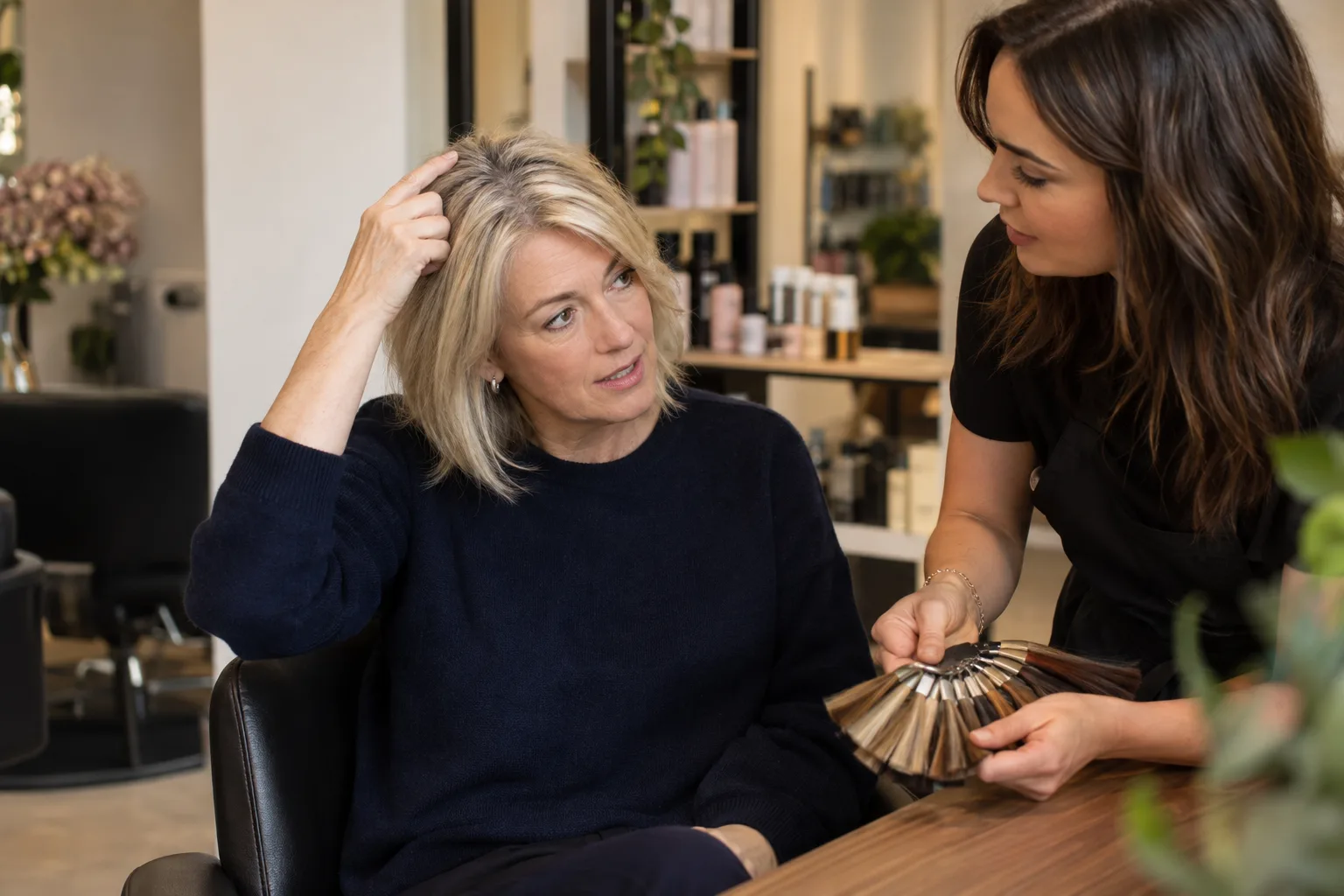
Cutting a fringe can alter an existing colour pattern. Longer highlighted strands may become short pieces around the forehead, while removing lighter ends can leave the front looking darker. If you are booking colour and a cut, discuss the fringe shape before deciding where new highlights should go.
Grey strands can also become more prominent or less visible when the front is redirected. A fringe does not reliably hide grey roots: separation, movement and the position of the parting all affect what shows. Decide whether you want to feature the contrast or discuss blending it with your colourist.
For readers keeping their length and embracing silver, our long grey hair colour and styling ideas offer a useful starting point for considering the fringe as part of the whole hairstyle.
What people are saying
“It’s not about age – it’s about balance,” stylist Nataliia Bumford told Harper’s Bazaar UK. Her approach is to start with a longer, narrower fringe and adjust it gradually, checking how it falls and moves. That gives the consultation a practical direction rather than treating 50 as a haircut boundary.
We agree with the emphasis on balance, but would retire the idea that a fringe needs to disguise something. You can choose forehead coverage simply because you like the shape. Equally, an open curtain fringe can be appealing precisely because it leaves more of the face visible.
The claim to question is effortless styling. Some fringes settle with very little encouragement; others need attention after sleeping, washing or being tucked under a hat. Ask your hairdresser to demonstrate the routine, including the tools involved, rather than accepting easy as a complete description.
Reference pictures should include something you dislike, too. Pointing out an edge that feels too heavy, sides that finish too abruptly or a centre that looks too short can prevent misunderstandings that a single favourite picture leaves unresolved.
It is also worth distinguishing a fringe from long face-framing layers. The latter can change the outline without placing much hair across the forehead. Our guide to what to ask for with a maxi fringe is useful when that longer boundary appeals more than a conventional fringe.
What happens next
Before booking, decide how you want the fringe to behave on an ordinary day. Mention glasses, frequent ponytails, exercise and any habit of tucking the front behind your ears. These details help establish where the ends should sit and how much freedom you need at the sides.
At the appointment, ask to see the proposed section before cutting begins. Check the width as well as the length. Then look at the finished fringe with your hair loose and tied back: the connection to the temples can look quite different when the rest is pulled away.
Make the first wash manageable
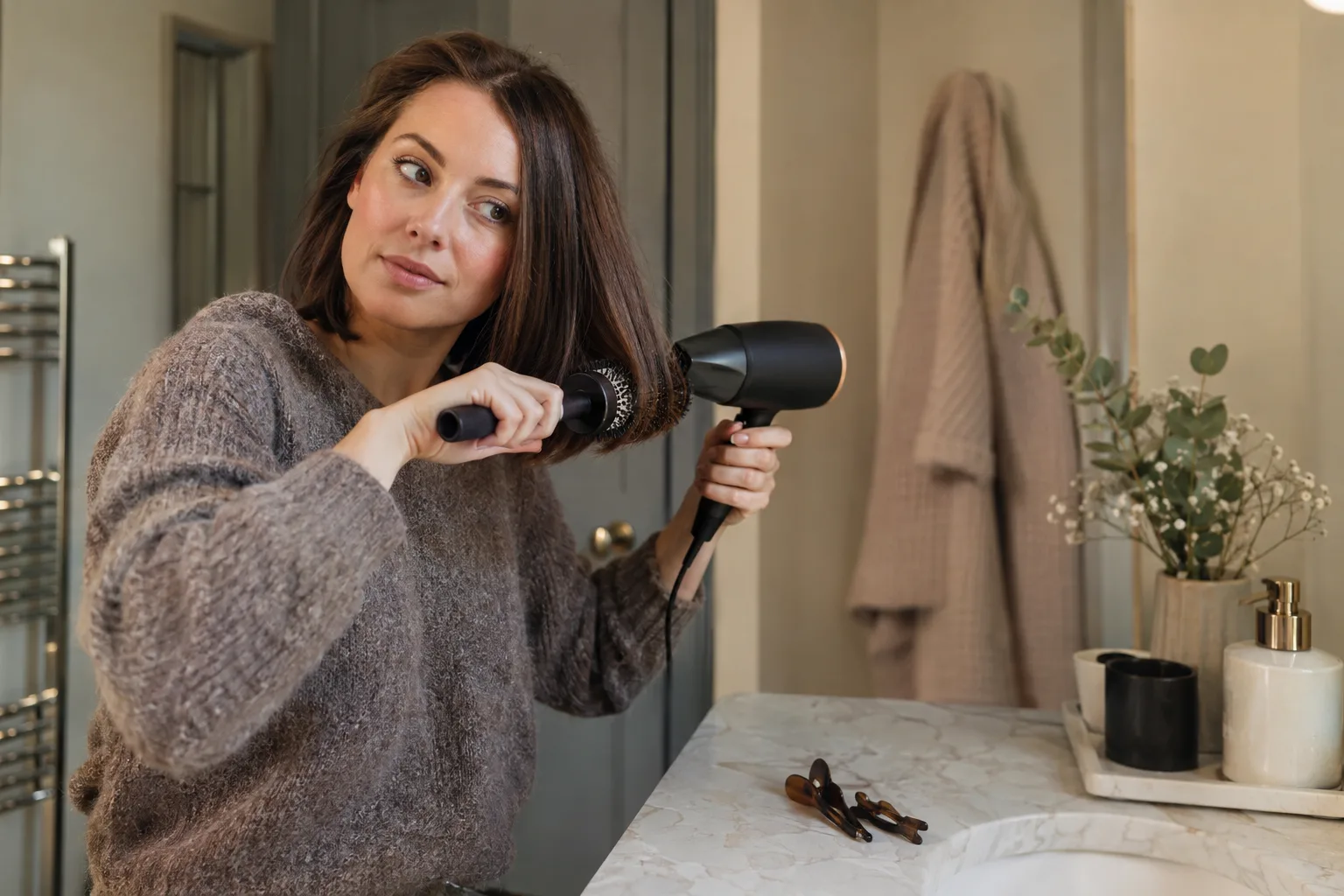
If you plan to blow-dry it, style the fringe while it is still damp rather than leaving it until last. For a straighter finish, gently directing the roots from side to side can help reduce an unwanted split before arranging the ends. Use a comfortable heat setting and keep the dryer moving.
Avoid loading the front with finishing product at the outset. Start with a small amount, then assess how the hair separates. A deliberately airy fringe can look quite different once its strands are coated and grouped together.
Finally, agree a maintenance plan before leaving. Ask how the salon handles fringe trims, what they cost and when the shape is likely to need attention. If you later choose to grow it out, discuss redirecting the extra length sideways or blending it into the front layers rather than repeatedly shortening it.
Why this matters
For UK readers weighing up a salon refresh, a fringe is a decision about time as well as shape. Ask for the trim price, a realistic home-styling demonstration and a colour-placement check before committing. If you are not ready to cut, experimenting with a different parting can help clarify how much openness you prefer around your face. Our guide to fuller-looking hairstyles without a haircut offers some lower-commitment ways to explore that change first.
Common questions
- What is the best fringe for women over 50?
- The best fringe suits your natural hair movement, preferred shape and styling routine. Age alone does not determine the cut; soft curtains, wispy coverage and side-swept lengths offer different options.
- Can you have a fringe with fine hair?
- Yes, fine hair can work with a fringe. Ask your stylist how much hair they would bring forward, because a deeper fringe section leaves less hair contributing to the sides of the cut.
- What is the difference between curtain bangs and a wispy fringe?
- Curtain bangs describe a fringe that opens around the centre; wispy describes a light, separated finish. The terms are not opposites, and a curtain fringe can also have wispy ends.
- Will a fringe cover grey roots?
- A fringe will not reliably conceal grey roots. Its movement, separation and parting affect what remains visible, so discuss colour blending separately if that is your aim.
- How do you stop a fringe splitting?
- For a straighter blow-dried finish, gently direct damp roots from side to side before arranging the ends. Natural growth direction can make a split persistent, so ask your stylist whether the shape needs adjusting.
- What should I ask my hairdresser before getting a fringe?
- Ask about the proposed width, finished length, daily styling routine and trim cost. Mention glasses and how often you tie your hair back, and check how the cut will affect existing highlights.
- How do you style a fringe while growing it out?
- A side-swept shape can help manage a fringe as it gets longer. Ask your hairdresser about blending the extra length into the front layers rather than repeatedly cutting it back.
Sources
This article was written by The Colour Edit using the sources listed above.