Hair Colour & Trends
Long grey hair: the colour and styling ideas we rate for 2026
From silver framing the face to softer colour transitions, our take on long grey hair puts your existing shade at the centre.

By Sophie Clarke, Editor
Published · 5 min read
Quick answerLong grey hair works with natural silver strands, blended highlights or a mix of grey and brunette. For 2026, we rate face-framing silver, a defined cut and simple styling that shows off the colour rather than disguising it.
Long grey hair has more than one colour story for 2026. Silver against brunette, white mixed with creamy blonde and curls threaded with grey all offer alternatives to an all-over, uniform shade. Kelly Hu’s silver face-framing strands and Andie MacDowell’s grey curls show how different the result can look without making length the thing that has to change.
Our pick is a colour plan built around the grey you already have, paired with a cut that earns its keep. That might mean preserving a bright streak, softening the boundary with previously coloured lengths or adding a fringe. It needn’t mean booking an entirely new shade.
What happened
The useful development here is the range of ways visible grey can sit within long hair. Hu’s brunette-and-silver combination keeps depth through the lengths while making the lighter front sections a feature. MacDowell’s curls offer a different reference: grey distributed through a shape with movement, rather than concentrated into a single statement streak.
These are distinct salon briefs. Asking to retain dark lengths with silver around the face is not the same as requesting an overall lighter blend. Take a photograph, but point out the specific detail you want: the placement of the silver, the contrast at the roots or the balance of light and dark.
Keep the contrast you like
We particularly rate visible silver beside brunette because it doesn’t require every strand to match. The darker sections give the pale ones definition. If your grey is already concentrated at the front, ask your colourist what can be left untouched before discussing anything that needs adding.
For readers keeping a brunette base, our guide to two brunette wave looks to take to the salon offers a useful starting point for discussing shape and movement separately from colour.
The same distinction applies to creamy grey-blonde. A warmer finish is a valid choice, not automatically a colour problem to correct. Establish whether you want pearl, cream or a more neutral silver before reaching for a toning product.
The background
Grey blending is a colour approach, not a single formula. A colourist may use highlights to introduce lighter strands, lowlights to restore depth, or toner to adjust the shade of suitable lighter sections. The aim is to reduce a stark contrast rather than necessarily cover every grey hair.
That differs from all-over coverage, where the intention is usually a more consistent colour from the root. Neither approach is inherently better. The practical question is how much visible grey you want, and how much upkeep you are happy to book and budget for.
What “greylights” actually means
“Greylights” is a descriptive label rather than a standardised salon service. It can suggest silver-looking ribbons or highlights that sit comfortably alongside natural grey. Ask how the effect would be created on your hair: preserving existing white strands is quite different from lightening previously dyed sections.
Colour history matters here. Dark permanent dye through the lengths can make a pale silver result a more involved appointment, potentially requiring several stages. Bring details of recent home colour, including where you applied it, so the colourist can assess the starting point and arrange a strand test where needed.
Long hair also holds on to older colour through its ends. A softer root area will not automatically remove a darker band further down. Ask to see how the proposed blend will connect the roots, mid-lengths and ends, rather than judging the plan only around the parting.
Purple shampoo has a narrower job: its violet pigment can counter yellow tones on pale hair. It does not turn brunette strands silver or replace a colour correction. Follow the product instructions, and reduce use if the finish starts looking violet or dull. Creamy blonde-grey may need less cooling than an icy result.
What people are saying
Our view at The Colour Edit is that the most useful long-grey-hair conversation starts with design, not age. There is no styling rule that makes a shorter cut compulsory when grey becomes visible. The relevant questions are how the ends sit, how you wear your hair most days and what shape you enjoy maintaining.
A shorter fringe against long lengths is one option we rate. It creates a separate shape around the face and gives you something to style when the rest is tied back. Curtain sections can tuck away; a fuller fringe usually demands more regular attention to its length and finish.
Before committing, decide where those shortest pieces should fall and whether they must reach a ponytail. Our guide to what to ask for with a maxi fringe helps turn a reference photograph into a more precise haircut conversation.
Paulina Porizkova’s swept-up grey lengths offer another useful reference: an updo can display mixed tones without requiring freshly curled hair. Loose pieces around the face change the outline, while a twist gathers the different shades together. That makes the hairstyle, rather than uniform colour, the focal point.
We would also drop the idea that grey must always look icy or exceptionally glossy to look considered. A shine serum can add polish, but soft curls and a creamy tone are equally deliberate choices. The finish should suit the style, not become another standard to meet.
What happens next
Start your next consultation with three decisions: how much grey to leave visible, how much length to retain and which appointments you can realistically maintain. Ask your colourist to separate the initial colour work from subsequent toning, trimming and root appointments. Grey blending can still involve upkeep; it is not a promise of maintenance-free colour.
Test the styling before changing the colour
Try your usual parting, then a slightly different position, and check where the silver falls. A small shift can reveal or tuck away a lighter section without adding colour. Look at the result with your hair down and tied back, because the visible pattern changes when sections are gathered together.
For a straightforward updo, secure a low ponytail, twist the length and pin it into a bun without pulling tightly. Leave out only the pieces you want to frame the face. For a higher placement, our guide to a softer high ponytail provides another shape to consider.
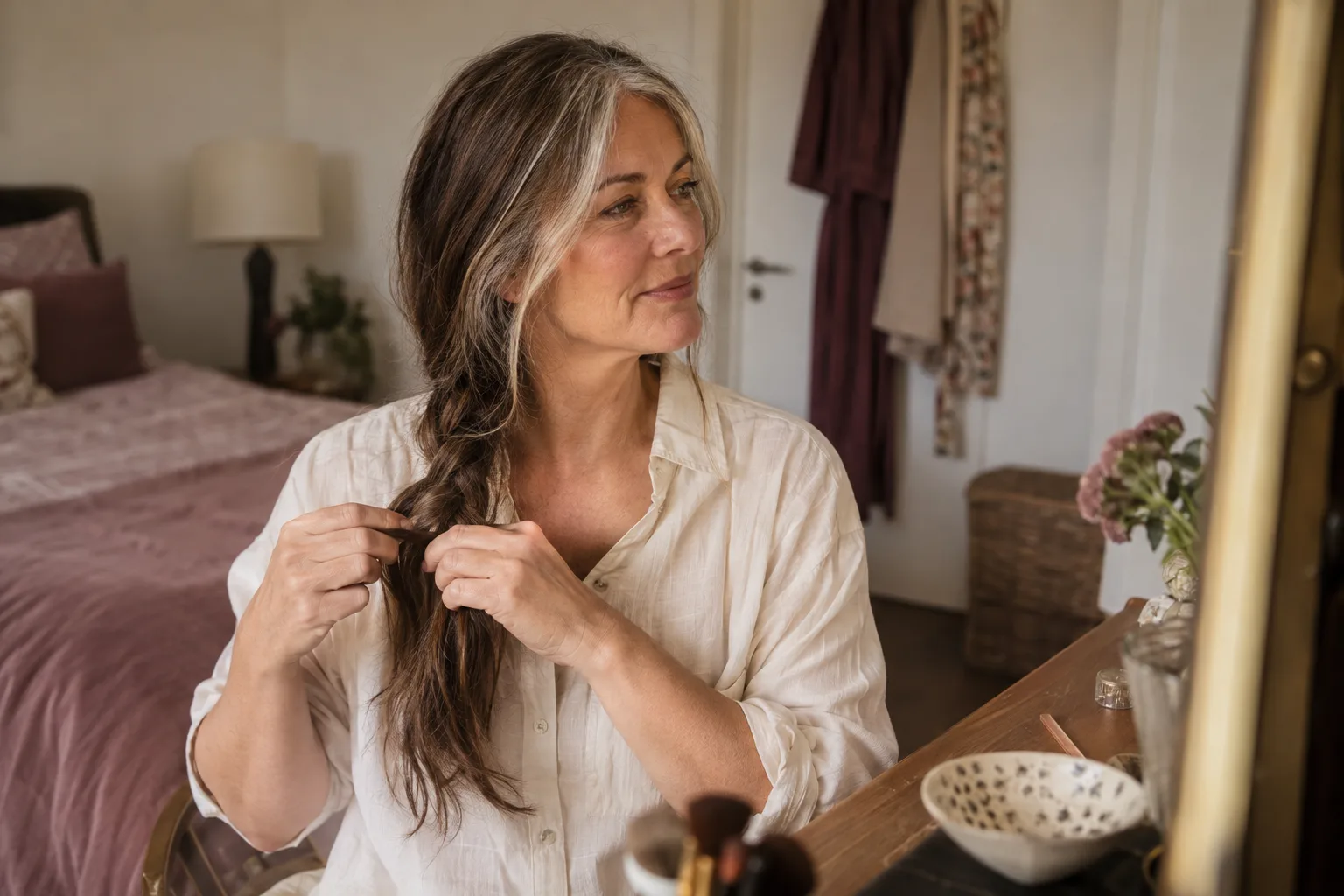
A loose plait is useful for showing alternating silver and darker sections. Secure it first, then gently ease the outer edges for a softer outline. A ribbon is optional; choose it for the outfit rather than treating an accessory as something grey hair needs.
Keep finishing products targeted
If using heated tools, start with the lowest effective setting and avoid repeatedly passing over the same section. Heat protectant does not make excessive heat harmless. For added shine, use a small amount of finishing serum through the lengths and ends, then reassess before adding more.
Temporary root powder or spray remains an option for days when you want less contrast at the parting. Powder allows targeted placement; spray can cover a broader section. Follow the directions, allow it to set before touching or dressing, and remember that temporary coverage changes that day’s finish, not your underlying colour plan.
Why this matters
For UK readers weighing up salon costs and the practicalities of growing out colour, the useful move is to agree a manageable plan rather than chase a perfectly uniform silver. Ask what can stay untouched, what needs blending and how the result will look between appointments. If you are also reconsidering length, our guide to choosing a bob by its shape rather than its label can help clarify the cut conversation. Keeping long hair and choosing a shorter style are both options, not obligations.
Common questions
- What is grey blending on long hair?
- Grey blending uses highlights, lowlights or toning to soften the contrast between grey and surrounding colour. On long hair, the plan also needs to account for older dye through the mid-lengths and ends.
- What are greylights?
- Greylights is a descriptive term for silver-looking strands or highlights that work alongside natural grey. It is not a standardised salon service, so ask whether the proposed result involves preserving grey, lightening hair or toning.
- Can I keep brunette hair with grey around my face?
- Yes, brunette lengths can sit alongside visible silver face-framing sections. Ask your colourist which existing grey strands can remain untouched and how to maintain the contrast you like.
- Does long grey hair need purple shampoo?
- Not necessarily: purple shampoo is useful for countering unwanted yellow tones, rather than something all grey hair requires. It cannot lighten brunette hair, and excessive use can leave pale sections looking violet or dull.
- What fringe works with long grey hair?
- Curtain sections or a fuller fringe can both work with long grey hair. Choose according to where you want the shortest pieces to fall, how much styling you want and whether they need to reach a ponytail.
- How can I style long grey hair without heated tools?
- Try a loose plait or a low twisted bun to show the different tones without heated tools. Changing your parting can also reveal a silver section or tuck it beneath darker hair.
- Can I use root concealer while growing out grey hair?
- Yes, temporary root powder or spray can reduce visible contrast while you grow out colour. Powder suits targeted placement, while spray can cover broader sections; neither changes the underlying colour.
About the writer
Sophie ClarkeEditor · London
Sophie edits The Colour Edit and has a soft spot for a good gloss.
More from SophieSources
This article is original reporting by The Colour Edit based on the sources above. Last reviewed 9 October 2026. Product mentions are editorial unless clearly marked as sponsored.