Hairlines & Edges
Paris Fashion Week hair: softer edges, sharper fringes
From relaxed partings to dramatic micro fringes, the Paris shows offered fresh ways to frame the face without prescribing one finish for everyone.
By The Colour Edit Editorial Team
Published · 6 min read
Quick answerParis Fashion Week hair for spring/summer 2027 ranged from off-centre partings and relaxed knots to micro fringes and sculpted shapes. Our most wearable takeaway is to choose your hairline finish separately from the rest of your style: sleek lengths needn’t mean perfectly flattened edges.
The most useful detail in Paris Fashion Week hair for spring/summer 2027 wasn’t a particular bun or a must-copy haircut. It was the different treatment of the hair around the face: off-centre partings, very short fringes, swept-back fronts and finishes that allowed individual texture to remain visible.
For our Hairlines & Edges edit, that distinction matters. A polished style doesn’t have to begin with every small hair pressed flat, and a relaxed finish needn’t look accidental. We rate the contrast between a considered outline and less uniform lengths: it offers something practical to borrow from the shows without recreating a backstage production.
What happened
The Paris collections brought together two noticeably different styling approaches. One worked with each model’s existing texture and character; the other used hair to construct a more theatrical silhouette. Rather than settling on a single finish, the shows made room for both restraint and exaggeration.
Among the quieter details were off-centre partings on short hair, lengths tucked into collars, loose texture and compact knots. Sleek ponytails also appeared, but they were part of a broader mix rather than the only route to looking put together. The position of the parting and the direction of the front sections did much of the visual work.
At the more dramatic end, micro fringes sat against extra-long lengths, with separation through the hair adding definition. Other looks changed the apparent outline of the head through sculptural styling. Padding helped build some of those shapes: a useful reminder that an ambitious catwalk silhouette may depend on hidden construction, not simply more hairspray.
There was variety beyond that contrast, too. Glossy curls and generous volume appeared alongside braids, wigs and styling influenced by different subcultures. The common thread was character, not an instruction that everyone should adopt the same haircut or smooth their hair into an identical outline.
Our pick for everyday wear is the modest parting shift. It can change how the front section falls without committing to scissors. As with the ideas in our guide to fuller-looking hairstyles without a haircut, changing direction is worth trying before adding more product. Work with where the hair will comfortably sit rather than forcing a deep sweep.
The background
A fringe, a parting and a swept-back style each frame the face differently. A fringe puts a visible line of hair across the forehead; a parting determines where sections divide and fall; pulling hair back exposes more of the natural hairline. That is why the same bun can feel quite different with a centre parting, an off-centre division or no defined parting at all.
A micro fringe is a cut, not just a finish
The catwalk’s very short fringes deserve a little caution before becoming a salon request. Length, density, growth direction and the way hair behaves after drying all affect the result. Curly hair can sit considerably shorter once dry, so the finished length needs discussing rather than guessing from a photograph.
Ask your hairdresser to explain how the proposed fringe would sit without a full blow-dry and how often its outline would need tidying. Our guide to what to ask for when choosing a fringe offers a useful consultation starting point. The relevant question is how the shape fits your routine, not simply whether it resembles the runway reference.
Styling and colour coverage are different jobs
Smoothing paste or gel controls the arrangement of hair; temporary root colour changes its visible shade. One cannot reliably stand in for the other. A sleek front may make the contrast between grey roots and coloured lengths more noticeable because the sections are neatly separated and exposed.
If you want temporary coverage, choose a product intended for that use and follow its application instructions. Powder usually allows more targeted placement along a narrow parting, while spray can cover a broader root area. Neither needs to become an opaque band around the forehead. Keep coverage on the intended area, and never use hair concealers on eyebrows or near the eyes.
Finish the parting before deciding where colour is needed. Moving it afterwards can expose a different line of roots and undo careful placement. Check the result with your head turned as well as facing forward: the temple sections are easy to miss in a straight-on mirror check.
What people are saying
Hairstylist Anthony Turner described a personal, model-led approach backstage. Speaking to Stylist, he explained that the intended effect was one where “nothing feels too styled or overworked”. His work included both natural movement and more precise shapes, showing that an easy-looking finish need not mean leaving everything untouched.
Elsewhere, hairstylist Louis Ghewy described references drawn from nightlife, nature and imagined creatures. His explanation of building larger shapes with padding makes an important distinction: those proportions were designed effects. They should not become a benchmark for what ordinary styling products ought to achieve at home.
Our view is that the natural-texture approach translates most readily to the front of the hair. Rather than brushing every short strand into the same direction, decide which sections need control and which can stay softer. You can define the main shape while leaving a little movement at the temples, if that suits the finish you want.
That does not make sleek styling the wrong choice. A crisp outline can be the whole point of a ponytail or knot. The practical difference is between deliberate placement and repeatedly adding product because a strand refuses to sit exactly like its neighbour. More product can change the feel and finish without solving the direction of the hair.
For a pulled-back reference with a gentler outline, our look at the Princess of Wales’ softer high ponytail explores that balance. Borrowing a detail is more useful than treating a complete runway look as a compulsory package.
What happens next
Treat the spring/summer ideas as options to test, not a forecast of what everyone will wear. The lowest-commitment experiment is to change one element at a time: move the parting slightly, loosen the front of a knot or try a more defined finish through the lengths. Keeping everything else familiar makes the difference easier to judge.
Build the outline before adding the finish
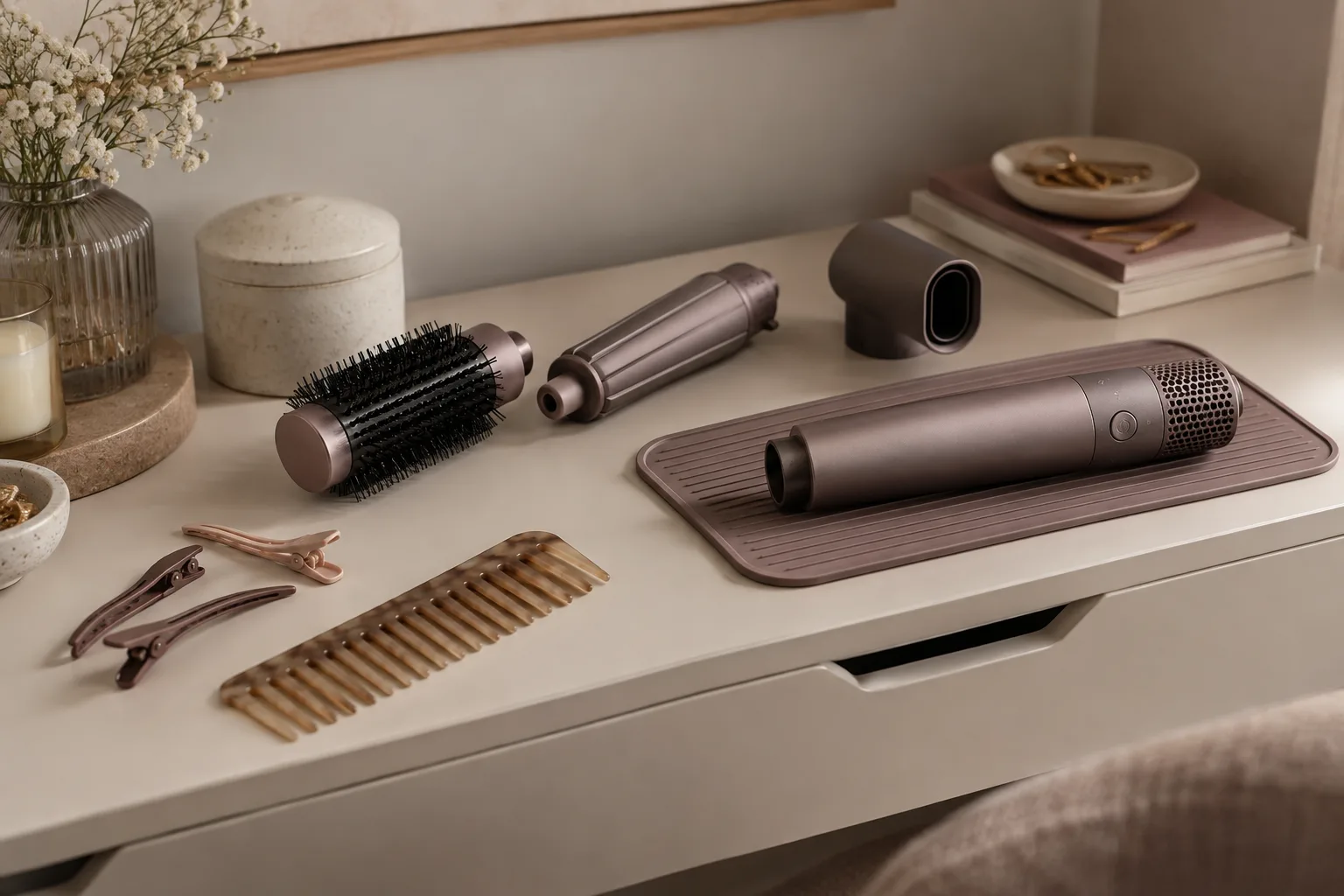
Start by placing the front sections and securing the main style comfortably. If you use heat to redirect the roots, follow your tool’s instructions and use suitable heat protection. Our guide to which multi-styler attachments you actually need can help separate useful tools from unnecessary extras.
Use small amounts of styling product, adding more only where the shape needs support. With an oil, concentrate on the lengths if your aim is separation rather than a glossy root. For a knot, keep the fastening comfortable; a polished appearance does not require pulling the hair as tightly as possible.
If temporary root coverage is part of your routine, check the product’s directions for use alongside styling products. Requirements vary, particularly around applying to dry hair and allowing colour to set. Before getting dressed, check for transfer according to the instructions rather than assuming every temporary formula behaves alike.
For a more permanent change, take your colourist or hairdresser a specific request: a shorter front section, a different parting or a colour placement that works when your hair is tied back. Those details give a clearer starting point than asking for fashion-week hair. The best adaptation is one you can reproduce on an ordinary morning.
Why this matters
For UK readers juggling salon appointments and everyday styling, the useful lesson is to settle the shape before deciding how much root coverage or hold you need. Try your usual ponytail with a slightly different parting, then check which areas are actually visible. If you want a cut that does more of the framing work, our guide to soft layers and a full fringe offers another direction to discuss. Ask your hairdresser to demonstrate the front section, not just the finished look.
Common questions
- What are the Paris Fashion Week hair trends for spring/summer 2027?
- The shows featured off-centre partings, natural-looking texture, sleek ponytails, knots, micro fringes and exaggerated sculptural shapes. Glossy curls, braids and wigs added further variety rather than one uniform look.
- How can I try runway hair without getting a haircut?
- Try shifting your parting slightly or changing the front sections of your usual knot or ponytail. Adjust one detail at a time so you can judge the effect before adding more product.
- What should I ask my hairdresser before getting a micro fringe?
- Ask how short it will sit when dry, how your growth direction affects it and how often it will need tidying. Discuss how it will look without a full blow-dry.
- Root powder or root spray for a narrow parting?
- Root powder usually offers more targeted placement along a narrow parting, while spray can cover a broader area. Follow the product’s instructions and position your parting before applying coverage.
- Does root concealer hold flyaways in place?
- Root concealer provides temporary colour coverage, not styling hold. Use a suitable styling product to control the shape, and check the concealer’s instructions before combining products.
- Do I have to flatten every small hair for a sleek ponytail?
- No, a defined ponytail can still have softer sections around the temples. Decide how precise you want the outline to be, and secure the style comfortably rather than pulling it excessively tight.
- How were the exaggerated runway hair shapes made?
- Some larger shapes used padding to build their silhouettes. Those constructed proportions are not a realistic measure of what hairspray or other styling products should achieve alone.
Sources
This article was written by The Colour Edit using the sources listed above.