Hairlines & Edges
Claudia Winkleman's ponytail puts the fringe first
The presenter's swept-back style offers a useful lesson in balancing a full fringe, neat sides and a hairline that still looks like yours.
By The Colour Edit Editorial Team
Published · 5 min read
Quick answerClaudia Winkleman's ponytail pairs a high, swept-back shape with her signature full fringe. To recreate the balance, section off your fringe first, gather the remaining hair towards the crown and smooth the sides without pulling them tight.
Claudia Winkleman has worn her dark hair swept into a high ponytail on The Celebrity Traitors, leaving her familiar full fringe in place. The change is in the silhouette: instead of lengths sitting around her shoulders, the hair is gathered back, giving the front section a more distinct outline.
For our Hairlines & Edges edit, the useful detail is that contrast. A ponytail need not mean scraping every strand away from the face. Keeping a deliberate section loose at the front allows the sides to look tidy without making an entirely exposed hairline the centre of the style.
What happened
Winkleman's ponytail sat high towards the crown, with the sides swept back and her dark fringe still prominent. She wore it with knitwear and a skirt: a combination that makes this feel like a practical dressing idea rather than a hairstyle reserved for an evening event.
The wardrobe context matters here. Sinead McKeefry styles Winkleman for the series, whose outfits include substantial knitwear, pleated skirts and high-collared outerwear. Taking the lengths off the shoulders gives those shapes room. It is a useful consideration when your own hair catches beneath a coat collar or bunches against a chunky jumper.
We rate the separation between the two parts of the hairstyle. The fringe supplies the familiar face-framing shape; the gathered lengths change the profile. You can borrow that principle without copying the exact height, colour or finish. A slightly lower fastening will give a different result while retaining the distinction between front and back.
There is also a worthwhile comparison with the Princess of Wales' softer high ponytail. Rather than treating every high ponytail as the same hairstyle, look at what happens around the temples, where the fastening sits and how much movement remains at the front.
The background
A fringe changes the balance
A full fringe creates a visible horizontal shape across the forehead, while a high ponytail draws the eye upwards and backwards. Those contrasting directions are what make the combination distinctive. The effect comes from arranging the hair, not from changing the face itself.
For a home version, isolate the fringe before gathering anything else. Use a comb to find the section you normally wear forward, then keep it separate with a clip. Pulling all your hair back and fishing the fringe out afterwards can disturb the sides and catch longer strands that belong in the ponytail.
Work with the way your fringe already falls. If it separates naturally, forcing it into a solid curtain may require more daily styling than you want. Our guide to fringes for women over 50 and what to ask for at the salon explores the practical questions behind choosing a shape, rather than treating age as a haircut instruction.
Swept-back hair shows different roots
A change of direction can reveal colour you rarely notice with your hair down. Grey strands around the temples or along the sides may become more visible when the surrounding hair is brushed backwards. That does not mean your colour suddenly needs redoing; you are simply seeing a different section.
If you want temporary coverage, choose it for the area you intend to conceal. A root powder offers controlled placement on small patches of exposed roots. A root spray can cover a broader section, but needs careful positioning and protection for clothing. Follow the product's directions and keep applications away from the eyes and face.
Shade selection deserves the same care as placement. Match the roots you want to blend with, rather than automatically choosing the colour of lighter ends. A concealer that is too dark can create an obvious block beside the skin. Build coverage gradually, checking the edge rather than aiming for a completely opaque finish.
What people are saying
Our take is that the fringe makes this ponytail worth borrowing, not an expectation of perfectly slick edges. The most useful question is not whether it suits absolutely everyone, but which part you like: the exposed neck, the higher fastening, the smooth sides or the familiar front section.
A sleek surface and a tight ponytail are not the same thing. You can gather the hair securely, then use a brush and a little suitable styling product to settle the outer layer. If the fastening feels uncomfortable, loosen it or reposition it; pulling harder is not a necessary finishing step.
Equally, small hairs around the temples do not all need to disappear. Leaving them alone can keep the outline less rigid, while selectively smoothing a few creates a neater edge. The contrast between controlled shapes and less uniform boundaries also runs through our edit of Paris Fashion Week hair, softer edges and sharper fringes.
We would also separate inspiration from a shopping list. The visible shape does not tell you which products created it, and shine alone cannot identify a particular formula. Start with the tools you already use successfully. Add a finishing product only if there is a specific job for it, such as settling flyaways or adding hold.
What happens next
Try the shape before adding the finish
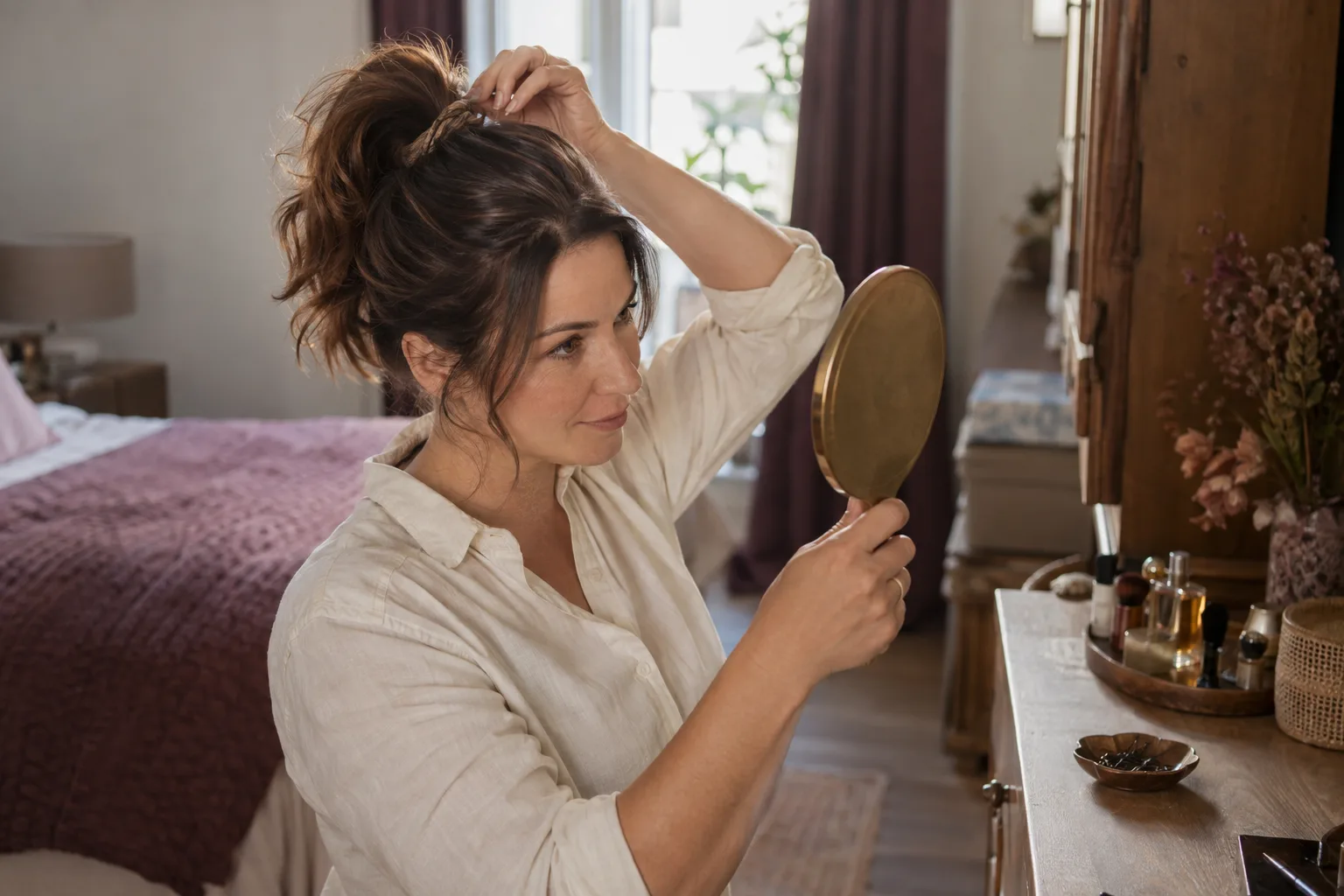
Begin with detangled hair and the fringe clipped aside. Gather the remaining lengths loosely in your hand, moving the bundle higher and lower before securing it. Check the side view as well as the front: the placement that looks balanced head-on may feel too high once you see the profile.
Brush the sides towards your chosen position and fasten with a covered hair tie. Keep enough ease to turn your head comfortably. For layered hair, use pins to secure shorter sections that do not reach, rather than repeatedly tightening the whole ponytail to catch them.
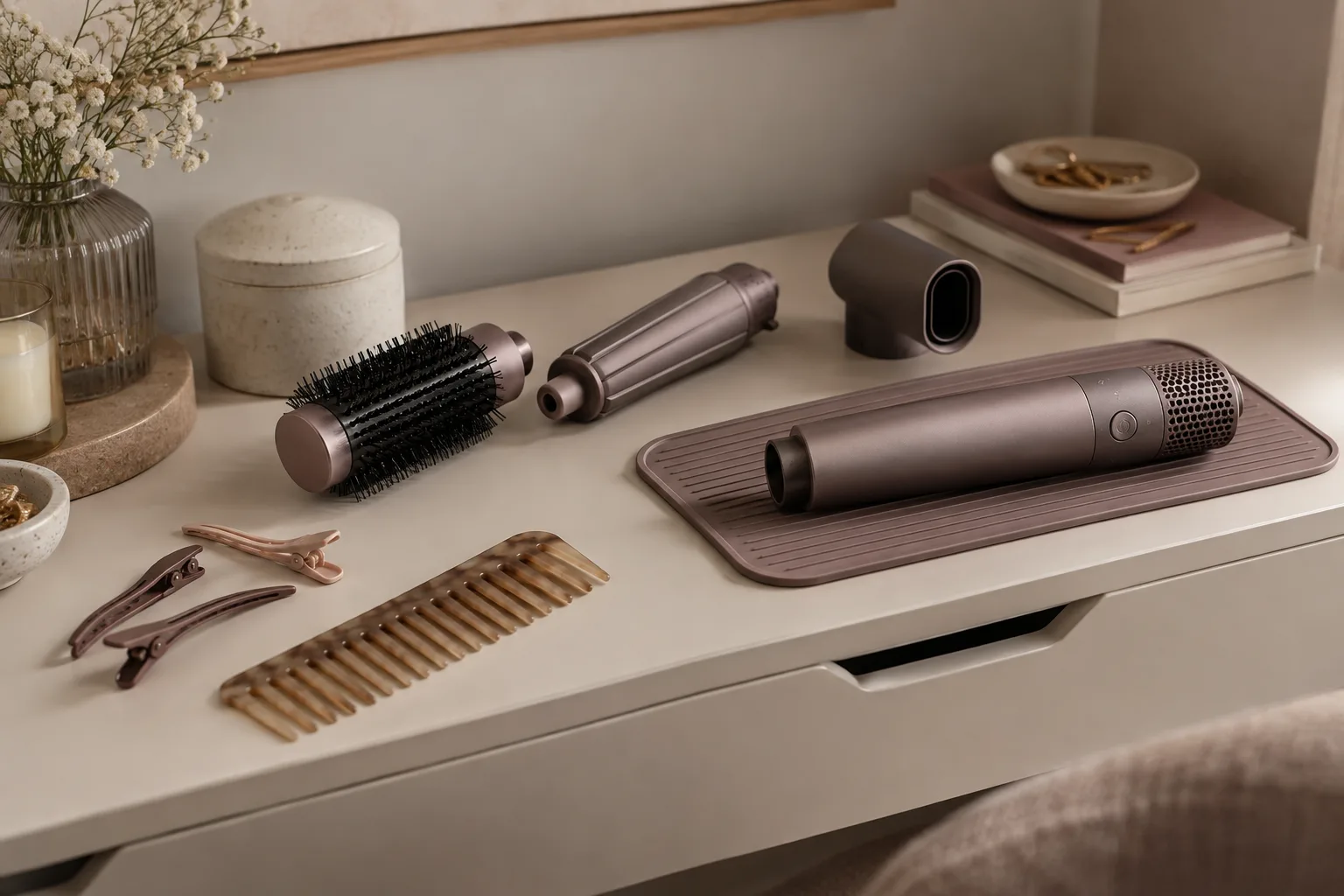
Release the fringe and arrange it separately. If it needs reshaping with a dryer, use controlled airflow and the lowest effective heat setting. Choose the tool for that small task; our guide to which hair multi-styler attachments you actually need helps distinguish useful functions from unnecessary extras.
Once the shape is settled, assess any roots you want to blend and follow your concealer's application instructions. Avoid brushing repeatedly through freshly applied pigment, which can move it beyond the intended area. Let products set as directed before touching the finish or putting on pale clothing.
For a salon appointment, bring a reference of the ponytail alongside a picture of how you normally wear your hair down. Ask your hairdresser which front sections should remain separate and whether your layers will reach the fastening. If temple colour is your concern, ask your colourist to assess those areas with your hair tied back, not only along your usual parting.
Why this matters
For UK readers moving between coat collars, office days and evenings out, the practical value is a style you can adjust without committing to a cut or colour change. Try the ponytail with your usual fringe first, then decide how polished you want the sides. If you prefer more movement at the crown, our guide to fuller-looking hairstyles without a haircut offers other styling routes. Any root coverage can stay optional: choose the outline you like before deciding what to conceal.
Common questions
- How do I recreate Claudia Winkleman's ponytail?
- Separate your fringe, then gather the remaining hair high towards the crown. Smooth the sides, secure with a covered tie and arrange the fringe independently. Adjust the height to suit your preferred profile.
- Can you wear a high ponytail with a full fringe?
- Yes, a full fringe can stay loose while the remaining hair is gathered high. Section it off first so you do not have to pull shorter pieces out of the finished ponytail.
- Does a sleek ponytail have to be tight?
- No, smoothness comes from arranging the surface, not simply pulling harder. Gather the hair securely, then settle the outer layer with a brush and suitable styling product. Loosen or reposition an uncomfortable fastening.
- Why do my grey roots show more in a ponytail?
- Brushing hair backwards can expose temple roots and side sections usually covered by loose lengths. The change in visibility does not necessarily mean your colour needs redoing.
- Is root powder or root spray better for ponytail roots?
- Root powder offers controlled placement on small areas, while spray can cover broader sections. Choose for the area you want to blend, follow application directions and keep products away from the eyes and face.
- Can I make a high ponytail work with layers?
- Yes, if enough length reaches the fastening. Secure shorter sections with pins rather than tightening the entire ponytail to catch them, or try a lower position.
- What should I ask my hairdresser for a ponytail with a fringe?
- Ask which front sections should stay separate and whether your layers will reach your preferred fastening position. Bring pictures of the ponytail and your usual loose hairstyle so both ways of wearing it are considered.
Sources
- Harper's Bazaar UK: Claudia Winkleman ditches her signature hairstyle for elegant new look that's perfect for autumn
- Cosmopolitan UK: Claudia Winkleman's Celebrity Traitors outfits 2026: every look so far, and where to buy them
This article was written by The Colour Edit using the sources listed above.