Hair Colour & Trends
Chappell Roan's chunky highlights make a case for red and blonde
Wide strawberry-blonde sections, a crimson base and a tiny fringe: we rate the deliberate contrast in Chappell Roan's latest look.
By The Colour Edit Editorial Team
Published · 5 min read
Quick answerChappell Roan wore broad strawberry-blonde highlights through vivid red, straight-styled hair, finished with a short, choppy fringe. The look offers a bold alternative to softly blended highlights, with placement and contrast doing the work.
Chappell Roan has given red hair a distinctly graphic treatment: broad strawberry-blonde highlights running through a vivid crimson base, worn straight with a short, choppy fringe. The singer appeared in the look at a Los Angeles gathering, swapping her familiar curl-led silhouette for a finish that made the separate colours especially clear.
Hairstylist Virginie Pineda created the style. Our take? The useful idea here isn't simply to add blonde to red. It's to make the contrast intentional, with sections wide enough to register as part of the hairstyle rather than disappear into an all-over blend. That distinction is what makes this a reference worth taking to a colour appointment.
What happened
Roan's hair combined three distinct elements: a saturated red background, noticeably lighter strawberry-blonde sections and a straight finish. The fringe was cropped high on the forehead with an uneven, piecey edge, adding another strong line without turning the whole style into a perfectly uniform block.
The colour placement recalls the conspicuous highlights associated with early-2000s hair. Instead of using very fine strands to suggest a gradual change in shade, this approach lets you see where one colour stops and another begins. The separation is the point, not something a colourist needs to disguise.
Straight styling matters to the result. With fewer bends interrupting the lengths, the lighter pieces read as longer ribbons. Put similar placement through curls or waves and those ribbons would curve, overlap and appear differently as the hair moved. Neither finish is better; they simply show the colour differently.
The short fringe also changes the balance. It leaves the face more open while the lengths carry the contrasting shades. You don't need to copy that haircut to borrow the colour idea, though: a longer fringe or no fringe would give the same palette a different frame.
For a gentler interpretation of the warm, pale shade involved, our take on a strawberry-blonde bob offers another reference. Roan's version stands apart because strawberry blonde is an accent against a much stronger red, rather than the overall colour impression.
The background
Chunky highlights are about the width and visibility of the lightened sections, not one fixed shade combination. They can be placed close to the face, distributed through the top layers or tucked underneath. What connects them is their readable separation from the surrounding hair.
Fine highlights divide the hair into smaller pieces, which can produce a more blended effect. Balayage describes a freehand application technique rather than a guarantee of subtle colour. At a consultation, showing the size and location of the sections you like is more useful than relying on a technique name alone.
Red and blonde need a shared plan
Strawberry blonde sits in the warm blonde family, with a peachy or reddish cast. Crimson is a much more saturated red. Pairing them creates a substantial difference in depth while keeping warmth in both shades, so the effect isn't the same as putting icy blonde against red.
Getting that combination on your own hair depends on the starting colour and its history. Previously coloured lengths may need a different approach from uncoloured roots. Tell your colourist about permanent dye, lightener and any henna used on the areas you want changed; each can affect the available options.
A strand test can help a colourist assess how the hair responds before committing to larger sections. Ask what shade is realistically achievable and what condition the lengths are in. A reference picture establishes the destination, but it doesn't prescribe a safe, identical route for every head of hair.
Placement should also account for how you actually wear your hair. A central ribbon can move out of view when you switch your parting, while an underneath panel might appear mainly in a ponytail. Our guide to fuller-looking hairstyles without a haircut explores how partings and shape alter the overall finish.
What people are saying
We rate this as an alternative to the assumption that successful highlights must always look seamless. Visible sections can look considered when their width, spacing and tone relate to one another. Here, the straight lengths give the red and blonde enough uninterrupted space to make that intention clear.
That doesn't mean every contrasting section needs to be equally wide. Repeating identical stripes across the whole head can produce a very different effect from concentrating a few substantial pieces near the front. The useful salon conversation is about rhythm and placement, not simply requesting the chunkiest highlights available.
Our pick: borrow one strong element
For an everyday adaptation, we'd start by choosing the part of the look you actually want: the red-and-blonde palette, the broad sections or the cropped fringe. Taking all three together is a bigger visual change. Keeping your existing cut makes the colour the main decision.
The fringe deserves its own discussion rather than being treated as a finishing extra. A very short fringe leaves little length for sweeping aside, and its outline becomes less crisp as it grows. For a more flexible starting point, our guide to fringe shapes and salon questions breaks down what to consider before cutting.
We'd also resist treating straight hair as a requirement. If you usually wear curls, ask to see the proposed sections against your natural shape. A colour plan that only makes sense after a lengthy straightening session may not be the right plan for your routine.
What happens next
If you're booking a consultation, take the reference alongside a photograph of your own hair worn normally. Point out what you want to retain as well as change. That gives your colourist a clearer brief than a celebrity picture alone, particularly if your length or texture is different.
Ask about the upkeep before the application
Establish how the red base and lighter sections will be maintained separately. Refreshing a vivid base and adjusting the tone of blonde pieces are different jobs. Ask which appointments are likely to involve lightening, which involve colour refreshment and how the costs are broken down.
At home, be cautious with red colour-depositing masks or conditioners: they can also tint the blonde sections they touch. Follow your colourist's washing advice, and avoid assuming that a stronger all-over colour refresh will preserve the original contrast. The two shades need to remain distinguishable for this effect.
Visible regrowth is another decision, not an automatic flaw. Ask how closely the highlights will start at the scalp and what their grow-out will look like. Temporary root powder or spray can disguise selected roots between appointments, but neither can lighten red hair into blonde ribbons.
Finally, keep the finish achievable. If you're using straighteners, follow heat-protectant instructions and avoid repeatedly passing over the same section. Our guide to which multi-styler attachments you actually need can help separate useful styling functions from unnecessary extras. The goal is colour you enjoy wearing, not a reference you can only recreate once.
Why this matters
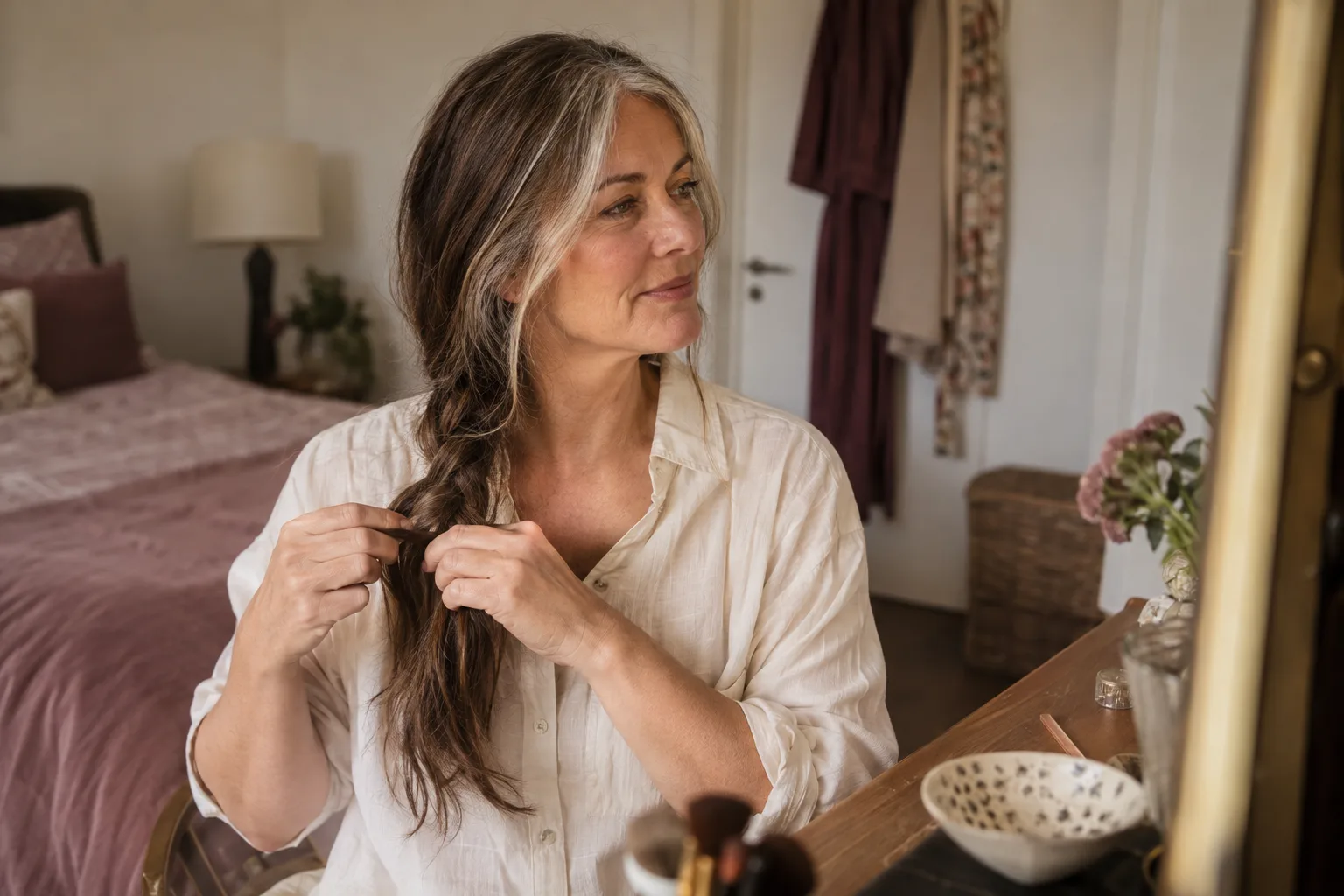
For UK salon-goers, this is a useful reminder to budget for the colour relationship, not just the initial highlights. Ask how the lighter sections will be protected when the red needs refreshing, and choose placement that works with your normal parting. If concealing grey roots is also part of your routine, discuss that separately so coverage doesn't accidentally obscure the contrast. Our guide to long grey hair and colour placement offers another way to think about combining different shades deliberately.
Common questions
- What colour are Chappell Roan's chunky highlights?
- Roan's highlights were strawberry blonde against a vivid crimson-red base. She wore the contrasting sections in straight-styled hair with a short, choppy fringe.
- What is the difference between chunky highlights and fine highlights?
- Chunky highlights use broader sections that remain visibly separate from the base colour. Fine highlights use smaller strands, which can create a more blended result.
- Can chunky highlights work on curly hair?
- Yes, but curls change how the sections appear as they bend and overlap. Ask your colourist to plan the placement around your usual texture rather than only a straightened finish.
- Can I get blonde highlights over dyed red hair?
- It depends on your colour history and how your hair responds to lightening. Give your colourist a full account of previous colour and ask about a strand test before agreeing on a target blonde.
- Will a red colour mask affect blonde highlights?
- Yes, a red colour-depositing mask can tint blonde sections it touches. Ask your colourist how to refresh the red without changing the lighter pieces.
- Can root spray create blonde highlights in red hair?
- No, temporary root spray cannot lighten red hair into blonde highlights. Root concealers are designed for temporary concealment, not the lightening process needed to create this colour contrast.
- Do I need a short fringe with chunky highlights?
- No, the colour placement can be adapted to a longer fringe or no fringe. Roan's cropped fringe is one element of her look, not a requirement for wearing contrasting highlights.
Sources
This article was written by The Colour Edit using the sources listed above.